
Which Healthcare Authorizations Need Deepfake Controls?
Authorization in healthcare covers several decisions that share one weakness: each relies on someone proving who they are and what they are allowed to do, often remotely. The table below lists the common ones and how synthetic media can be used against each.
The risk is uneven. A routine refill confirmation carries far less exposure than a request to release a full record to a new third party or a change to the clinician of record. Controls should scale with what a successful impersonation would give the attacker.
| Authorization | Who usually requests | Synthetic media vector | Control |
|---|---|---|---|
| Prior authorization for a service or drug | Provider office | AI-edited clinical photos or fabricated imaging attached as evidence | Media integrity screening; clinician review of flagged attachments |
| Release of records to a third party | Patient or personal representative | Face swap in a video verification; cloned voice on a phone request | In-app face check with manipulation analysis; callback to the number on file |
| Verbal order or prescription confirmation | Clinician to pharmacy or payer | Cloned clinician voice | Callback to a registered practice number; e-prescribing in place of voice where possible |
| Proxy or caregiver access | Family member or caregiver | Generated selfie or impersonated patient consent video | Verify the proxy as themselves and record the legal authority |
| Change of clinician of record or payment details | Provider administrator | Impersonated executive or clinician on a video call | Out-of-band confirmation with a second authorized person |
Faster Prior Authorization Raises the Stakes for Request Integrity
CMS finalized the Interoperability and Prior Authorization rule, CMS-0057-F, on 17 January 2024. It requires impacted payers, excluding qualified health plan issuers on the federally facilitated exchanges, to send prior authorization decisions within 72 hours for expedited requests and seven calendar days for standard requests, with operational provisions generally starting 1 January 2026. Payers must also stand up an HL7 FHIR Prior Authorization API that supports the request and response and gives a specific reason for any denial, generally from 1 January 2027.
Those changes help patients, and they also compress the time a human has to look at each request. When decisions move to APIs and short deadlines, any check that depends on a reviewer noticing something odd in a photo or a phone call gets weaker. Integrity checks on attached media and on requester identity need to run automatically in the same pipeline, with flagged items sent to a clinician reviewer before the deadline rather than after.
Verifying Who Is Asking and Whether They Have Authority
The HIPAA Privacy Rule requires covered entities to verify the identity and the authority of a person requesting protected health information when that person is not already known. HHS guidance on meeting that requirement electronically leaves the method to the entity's judgment. Before generative audio, a recognised voice on a call often served as informal verification. That shortcut is now unreliable: cloned voices can be built from short public recordings, and the FBI's December 2024 PSA describes criminals generating audio and video to impersonate trusted people.
Clinicians are targets as well as patients. The American Medical Association's policy principles on AI-generated deepfakes state that generative AI now allows realistic impersonation of physicians through synthetic images, audio and video. A cloned physician voice confirming a verbal order, or a fake clinician on a video call asking a payer to change a provider's payment details, uses that clinician's credibility to bypass controls.
- For patients and representatives: verify inside an authenticated app with a fresh selfie or short video screened for manipulation, then confirm legal authority for any representative.
- For clinicians and practices: call back on a number from the practice's registered records, not the number the caller gives.
- For high-impact changes such as record release to a new party or payment detail updates: require a second authorized person to confirm out of band.
- For every flagged request: record the signals, the reviewer and the reason for the decision.
Checking Images Attached to Authorization Requests
Prior authorization and claims increasingly carry photos: wounds, skin conditions, devices, injuries. Generative image editing makes it easy to worsen a wound, add a lesion or reuse one patient's photo for another. Payers do not need to examine every image in depth, but they should screen attachments automatically for signs of generation or pixel-level editing, check for duplicates across requests, and send flagged items to a clinical reviewer with the evidence attached.
Capture method matters as much as screening. Where a provider portal lets staff take clinical photos inside the app instead of uploading from a camera roll, the payer can bind each image to a session, a device and a time. That removes the easiest route for a reused or edited image and gives reviewers a clean baseline when something does look wrong.
When an attachment is disputed, such as in a fraud investigation or an appeal, NeuroDetect gives investigators a case-based workspace with explainability heatmaps down to image regions, model and version context, and an exportable forensic report the payer can keep with the file.
Limits of Media Checks in Authorization Decisions
A manipulation check can say an image or voice shows signs of being generated or edited. It cannot say whether a service is medically necessary, whether a representative's legal authority is valid, or whether a genuine clinician is submitting an inflated request. Those remain clinical and legal judgments.
False alerts carry real cost in healthcare, because a delayed authorization can delay care. Set conservative routing thresholds, make sure flagged requests reach a reviewer well inside the CMS deadlines, and measure how often flags turn out to be genuine media so thresholds can be tuned.
How NeuroVerify Supports Authorization Workflows
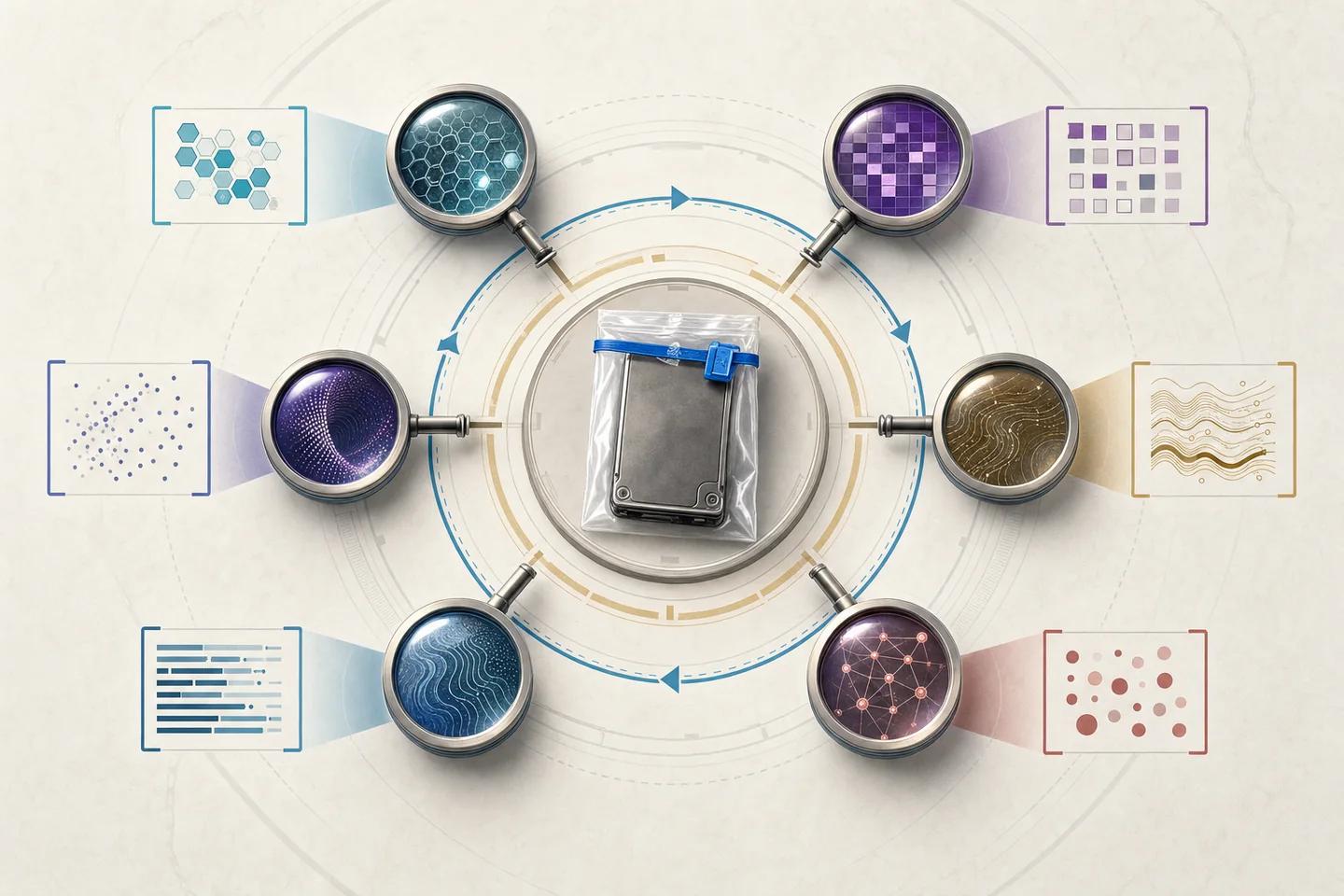
NeuroVerify, Neural Defend's face, video and audio API, checks a requester's selfie, video or voice sample for deepfakes and manipulation beyond liveness. One request returns six signals, including Live Presence Verification, Face Manipulation Detection, AI Generative Model Analysis and AI Pixel-Level Manipulation, combined into a unified risk score with signal-level evidence. The organisation's policy decides whether the request proceeds, steps up or goes to review.
NeuroVerify returns results in under 200 ms at p95 on eligible image requests under defined test conditions, which fits inside short authorization deadlines. Mobile and backend SDKs (Android, iOS, Flutter, Python, TypeScript, Go, Java) and a REST API cover patient apps and payer systems, and deployment can be managed cloud, private cloud or VPC, secure container, on premises or air-gapped. Neural Defend holds ISO/IEC 27001, ISO/IEC 27701, ISO/IEC 42001 and SOC 2 Type II certifications. NeuroVerify does not analyse ID documents or insurance cards.
Evidence boundary
Limitations
- Media analysis does not judge medical necessity, the validity of a representative's legal authority, or exaggerated claims made with genuine media.
- NeuroVerify does not analyse ID documents, insurance cards or clinical documents; NeuroDetect handles forensic review of disputed media.
- Clinical photos taken in poor light or compressed by messaging apps can trigger false alerts, so thresholds need tuning on real attachments.
- This page summarizes CMS and HIPAA requirements for orientation only and is not legal advice.
Source record
Sources and references
- Centers for Medicare & Medicaid ServicesCMS Interoperability and Prior Authorization Final Rule CMS-0057-F (fact sheet)Published January 17, 2024. Verified October 19, 2026.
- American Medical AssociationAI-Generated Deepfakes: Key Policy Principles and Proposed ProtectionsVerified October 19, 2026.
- FBI Internet Crime Complaint CenterCriminals Use Generative Artificial Intelligence to Facilitate Financial Fraud (PSA I-120324)Published December 3, 2024. Verified October 19, 2026.
- U.S. Department of Health and Human ServicesVerification of Identity and Authority in Electronic Health Information ExchangeVerified August 7, 2026.