
What Are Image Deepfakes?
Image deepfakes are still images that AI has generated or changed so that they could be taken as genuine photographs. They are the most common form of deepfake because they are the cheapest to make: a convincing synthetic face or edited photo takes seconds with free tools, while a convincing video still takes more effort.
They fall into five groups, which differ in how much of the picture is synthetic and in which detection signals work best.
| Type | What is synthetic | Typical misuse | Evidence detectors use |
|---|---|---|---|
| Fully generated face | The whole face, often the whole image | Fake profiles, synthetic identities | Generative-model fingerprints, frequency artefacts |
| Generated scene | An entire event or setting from a text prompt | Fabricated news images, fake disaster photos | Generative-model signals, semantic inconsistencies |
| Face swap in a photo | The face region only | Identity fraud, impersonation, intimate image abuse | Blending seams, lighting and noise mismatch in the face region |
| AI inpainting edit | A region added, removed or changed | Insurance and refund claims, altered documents | Pixel-level manipulation traces in the edited area |
| Synthetic ID photo | The portrait on an identity document or selfie | Account opening, KYC bypass | Face manipulation and generation signals, reverse image matches |

Where Are Image Deepfakes Used?
Identity fraud is the best documented use. The US Financial Crimes Enforcement Network said in alert FIN-2024-Alert004, issued on 13 November 2024, that criminals used generative AI to alter or generate images for identity documents such as driver's licences and passport cards, combined them with stolen or fake personal data to build synthetic identities, and opened accounts with them. Institutions often found the fakes by re-reviewing account opening documents, and reverse image searches sometimes matched ID photos to online galleries of AI-generated faces.
Synthetic faces also power fake profiles for romance and investment scams, fake employees and fake reviewers. Nightingale and Farid's 2022 PNAS study found people rated AI-generated faces slightly more trustworthy than real ones, which helps explain why these profiles work. Edited photos support false insurance and refund claims, generated scenes spread as fake news images, and face swaps are used to create non-consensual intimate imagery.
How Are Image Deepfakes Made?
Most image deepfakes come from two families of model. Generative adversarial networks, such as StyleGAN, made photorealistic synthetic faces common from 2019 onwards. Diffusion models, which build an image by removing noise step by step under the guidance of a text prompt, now power most general-purpose generators, including photorealistic systems such as Google's Imagen 3.
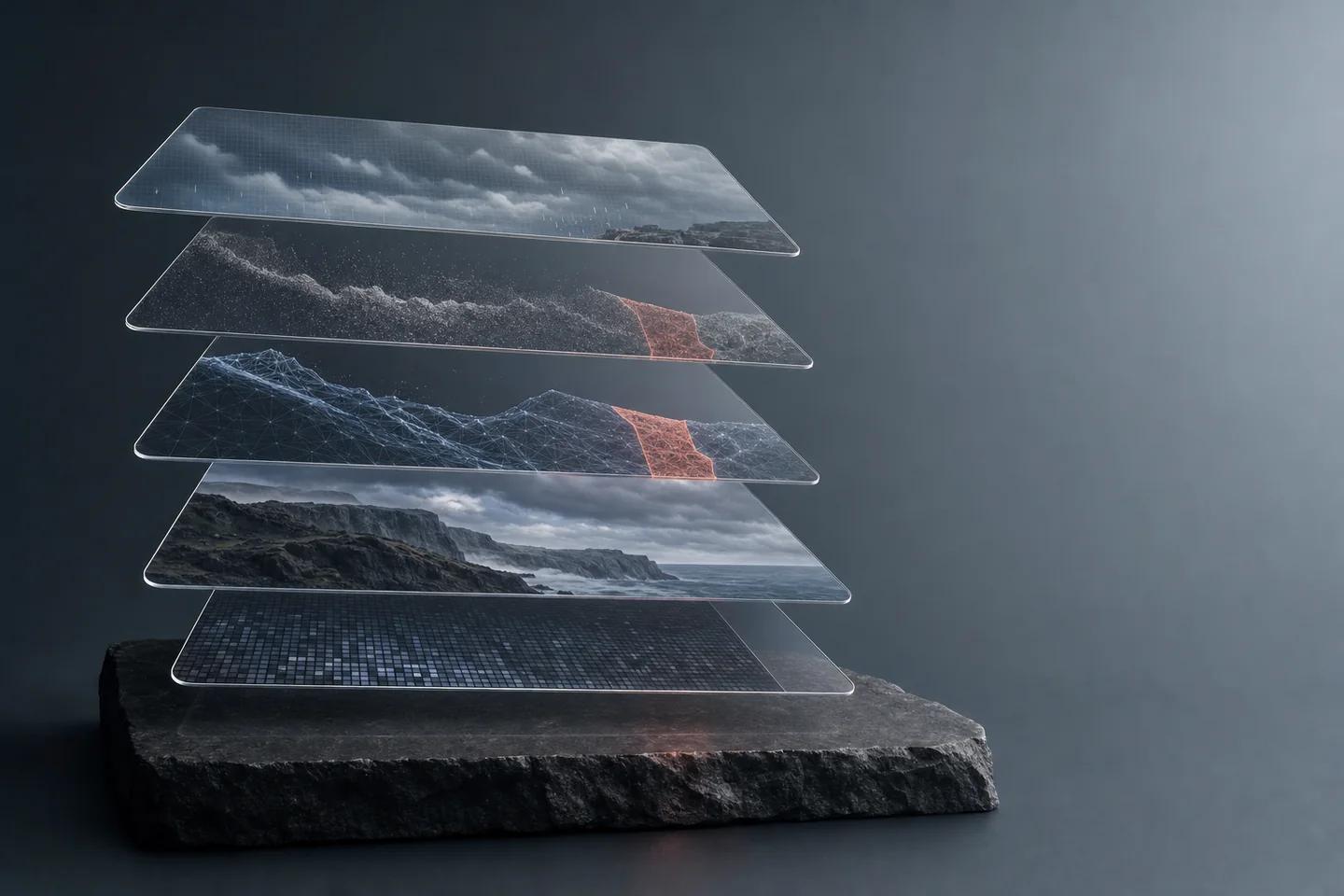
Editing tools add a third route. Inpainting lets a user select part of a real photo and ask a model to fill it with something else: damage on a car, a different face, a missing object. Because most of the image stays genuine, detectors have to localise the change rather than judge the whole picture.

How Are Image Deepfakes Detected?
Image deepfakes are detected by combining evidence from inside the file with evidence about where it came from. Inside the file, detectors look for traces of the generation process. Joel Frank and colleagues showed at ICML 2020 that GAN upsampling leaves strong artefacts in the frequency domain. Other signals include the noise pattern a real camera sensor leaves, blending seams around an edited region, and lighting or geometry that does not add up.
Generator coverage is the hard part. Ojha, Li and Lee reported in 2023 that classifiers trained on GAN images failed on diffusion and autoregressive images, and that features from a large pretrained vision-language model generalized far better. The GenImage benchmark, released in 2023 with over a million pairs of real and AI-generated images from diffusion models and GANs, was built specifically to test cross-generator generalization and performance on degraded images.
Outside the file, three checks help. Watermarks reveal content from tools that embed them; Google says its SynthID Detector checks content made with Google and partner tools, which leaves images from other generators unmarked. Provenance records such as C2PA Content Credentials describe how a file was made when they are present and intact. Reverse image search can show that a supposed photo already exists elsewhere or matches a known gallery of generated faces.
What Makes Image Deepfakes Hard to Detect?
Four things make image deepfakes hard to detect. New generators appear constantly and may not leave the traces older detectors learned. Compression and screenshots, common when images are shared through messaging apps, erase fine detail. Small inpainted edits change only a few percent of the pixels. And legitimate phone processing, beauty filters and upscaling produce textures close to what editing models create, which can cause false positives. The practical answer is to capture images through a controlled path where possible, ask for the original file rather than a forward or screenshot, and send uncertain results to a reviewer instead of rejecting them automatically.
A detection result also has limits of meaning. It can show that an image was generated or edited; it cannot say who made it or whether a real event lies behind it, and a genuine photo with a false caption passes every image detector.
How Neural Defend Detects Image Deepfakes
Neural Defend's NeuroVerify checks a face image in one API call with six signals, including face manipulation detection, AI generative model analysis and AI pixel-level manipulation, and returns one risk score with signal-level evidence in under 200 ms at p95 for eligible image requests. It is designed for onboarding selfies and other face images; it does not analyse ID documents.
For investigation, NeuroDetect accepts any authorised image, as well as video, audio and documents, and shows explainability heatmaps that point to the regions behind a result, with model and version recorded and a downloadable forensic report. Both run on ARCAS 1B, whose paper reports pooled accuracy of 99.99% on GenImage and 97.65% on OpenFake, among six benchmark families.
On the public VendorBench-100 benchmark, whose 100 adversarial still images include face swaps, AI photo edits, avatar compositing and opaque-provenance images, Neural Defend ranked first of 36 systems with an MCC of 0.876 against 0.646 for Reality Defender, with precision 0.963 and recall 0.987. One VendorBench author also co-wrote the ARCAS 1B paper; the corpus and results are public so anyone can rerun them.
Evidence boundary
Limitations
- Research figures cited come from specific datasets and generators and do not transfer directly to every new image model.
- The ARCAS 1B results are reported in Neural Defend's own paper and describe the evaluated records.
- VendorBench-100 covers 100 still images and one author also co-wrote the ARCAS 1B paper; NeuroVerify does not analyse ID documents.
Source record
Sources and references
- Financial Crimes Enforcement NetworkFinCEN Alert on Fraud Schemes Involving Deepfake Media Targeting Financial Institutions (FIN-2024-Alert004)Published November 13, 2024. Verified October 19, 2026.
- arXivGenImage: A Million-Scale Benchmark for Detecting AI-Generated Image (Zhu et al.)Published June 14, 2023. Verified October 19, 2026.
- arXivTowards Universal Fake Image Detectors that Generalize Across Generative Models (Ojha, Li, Lee)Published February 20, 2023. Verified October 19, 2026.
- arXivLeveraging Frequency Analysis for Deep Fake Image Recognition (Frank et al., ICML 2020)Published March 19, 2020. Verified October 19, 2026.
- Google DeepMindSynthIDVerified October 19, 2026.
- Proceedings of the National Academy of SciencesAI-synthesized faces are indistinguishable from real faces and more trustworthy (Nightingale and Farid)Published February 14, 2022. Verified October 19, 2026.
- arXivVendorBench-100: A Unified Cross-Paradigm Benchmark for Deepfake Image Detection (v2)Published July 29, 2026. Verified October 19, 2026.
- arXivBenchmarking Neural Defend ARCAS 1B: A Foundational Multimodal Deepfake Detection ModelPublished September 21, 2026. Verified October 19, 2026.