
What did the 2024 Sora report establish?
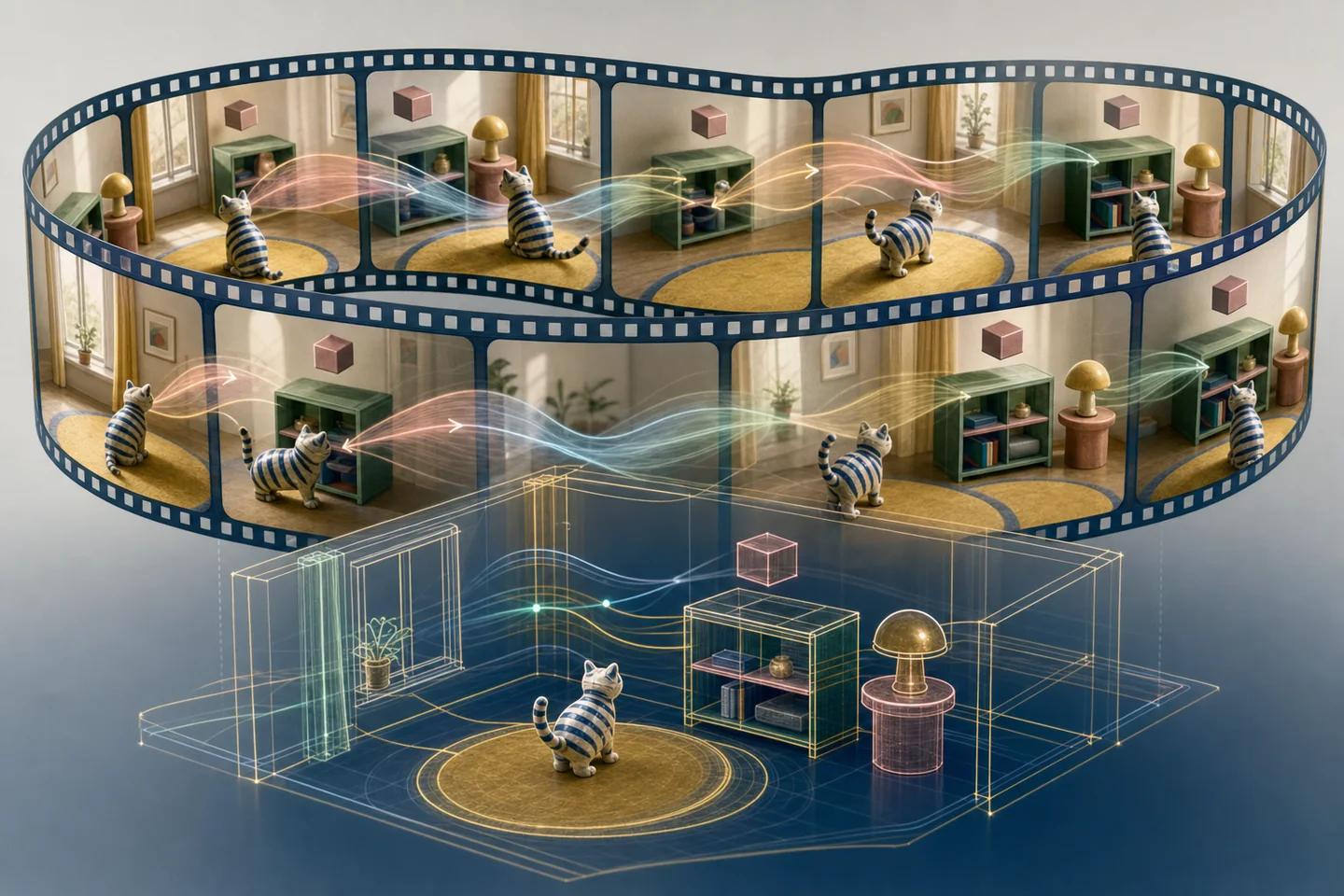
OpenAI's technical report of 15 February 2024, titled Video Generation Models as World Simulators, established that one diffusion transformer could be trained on images and videos of many durations, resolutions and aspect ratios, and generate high-fidelity clips up to a minute long. It did this by compressing visual data into a latent space and cutting that representation into spacetime patches, which play the role that tokens play in a language model.
The report also showed the same model animating still images, extending videos forwards and backwards in time, and editing existing footage from text. Just as clearly, it listed what the model got wrong: interactions where physics breaks, events whose consequences do not follow, and complex actions that fall apart over long durations. A fair reading keeps both halves together.
What did Sora's 2024 report establish about video scaling?
Its central claim was that video generation benefits from scale in the way language models did. The report compared samples from the same prompt at increasing amounts of training compute, with quality improving clearly as compute grew. It argued that training on visual data at native sizes, rather than cropping everything to one square format, improved framing and composition, and that a single patch representation let one model learn from a far larger and more varied pool of data.
OpenAI framed some of the resulting behaviour, such as consistent camera motion through a scene and objects that persist when briefly hidden, as signs that scaled video models could become simulators of the physical world. That is a research direction stated by the authors. The report did not provide a measured success rate for those behaviours across prompts, and its own failure examples show the simulation was incomplete.
How do spacetime patches work?
A video network first compresses raw frames into a smaller latent representation, reducing the data both in space and in time. That latent block is then divided into patches that each span a small region of the image across several frames. The transformer treats the patches as a sequence, so a short vertical clip and a long widescreen one simply become sequences of different lengths. Generation runs the diffusion process over these patches, and a decoder turns the final latent back into pixels.
Because a patch covers time as well as space, the model learns relationships between frames directly rather than generating frames separately and stitching them. That helps with smoothness. It does not by itself guarantee long-range consistency, which still depends on how much of the sequence the model can attend to and on what it learned from data.
How did Sora move from research preview to product?
The name now covers several releases with different capabilities and safeguards, which is why dates matter in any analysis.
| Date | Release | What changed |
|---|---|---|
| 15 Feb 2024 | Technical report and research preview | Spacetime-patch diffusion transformer; clips up to one minute; limitations documented |
| 9 Dec 2024 | Public release in ChatGPT for Plus and Pro users in the US and Canada | Product access with a system card and safety measures |
| 30 Sep 2025 | Sora 2 with an iOS app | Video with audio, social features and user cameos; visible moving watermark and C2PA metadata |
| Oct 2025 | Third-party watermark removers reported | Visible watermarks shown to be removable after download |
What the report did not show
The report was not a peer-reviewed paper with a full architecture, dataset description and evaluation protocol. Its examples were selected, so they prove that a capability occurred, not how often it occurs. It did not claim reliable physics, causal reasoning or long-duration identity consistency, and its stated limitations argue against those readings. Later products, including Sora 2, should be documented from their own sources rather than used to update what the 2024 report said.
Anyone comparing Sora with another generator, or testing a detector against it, should keep the evidence that the report itself lacked: the exact prompt, the number of attempts, how the shown clip was selected, its duration and resolution, the release used, and any editing afterwards. A one-minute capability describes the longest output the report demonstrated. Whether the clip stays consistent over that minute still has to be checked frame by frame, and so does whether the people in it keep the same faces throughout.
What Sora means for detection and attribution
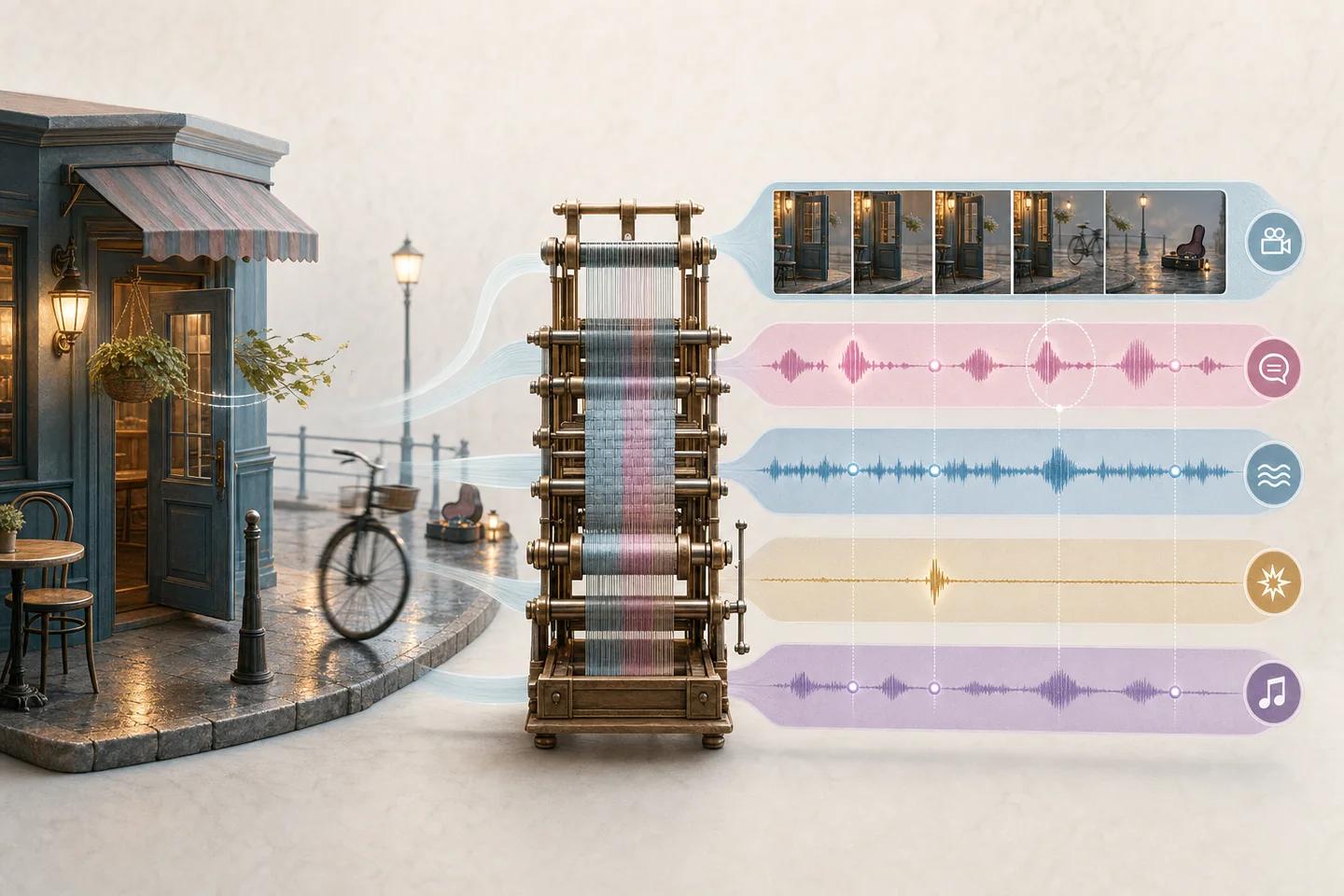
A product name does not identify one fixed generator. Model, interface, safeguards, watermarking and output processing can all change between releases while the name stays the same, so detector evaluations and incident reports should record the dated version. Visual resemblance to a public Sora demo is weak attribution, because other video models produce similar scenes and distribution changes the file.
Provenance helps but cannot be the only control. OpenAI says Sora output carries C2PA metadata, and Sora 2 adds a visible watermark, yet both can be stripped by re-encoding, screen recording or dedicated removal tools. A missing credential therefore says nothing about authenticity. Content analysis that works on the pixels, combined with account and upload context, covers the cases where provenance has been removed.
How Neural Defend handles Sora-era video
NeuroVerify screens face video and images at onboarding in one API call across six signals, including AI Generative Model Analysis and Live Presence Verification, and returns one risk score with signal-level evidence that your policy acts on. That matters as generated video with realistic people becomes easy to produce. For suspect clips in investigations, newsrooms or claims, NeuroDetect shows frame-level heatmaps and attention views, produces an LLM-assisted summary linked to the evidence, and exports a forensic report that records model context and uncertainty.
On the public VendorBench-100 benchmark, whose 100 adversarial still images include text-to-video stills, Neural Defend ranked first of 36 systems with MCC 0.876; one author also co-authored Neural Defend's ARCAS 1B paper, and the results are public to rerun. The benchmark does not test full video, so validate on clips from your own channel.
Evidence boundary
Limitations
- The 2024 report is a first-party technical summary, not a peer-reviewed paper, and its examples were selected.
- Product details for later releases come partly from a secondary source and may change as OpenAI updates Sora.
- VendorBench-100 tests still images only, including text-to-video stills; it does not test full clips, and one author overlaps with the ARCAS 1B paper.
Source record
Sources and references
- OpenAIVideo Generation Models as World SimulatorsPublished February 15, 2024. Verified August 7, 2026.
- OpenAISora System CardVerified August 7, 2026.
- OpenAISora Is HerePublished December 9, 2024. Verified August 7, 2026.
- WikipediaSora (text-to-video model)Verified October 19, 2026.
- arXivVendorBench-100: A Unified Cross-Paradigm Benchmark for Deepfake Image Detection (v2)Published July 29, 2026. Verified October 19, 2026.