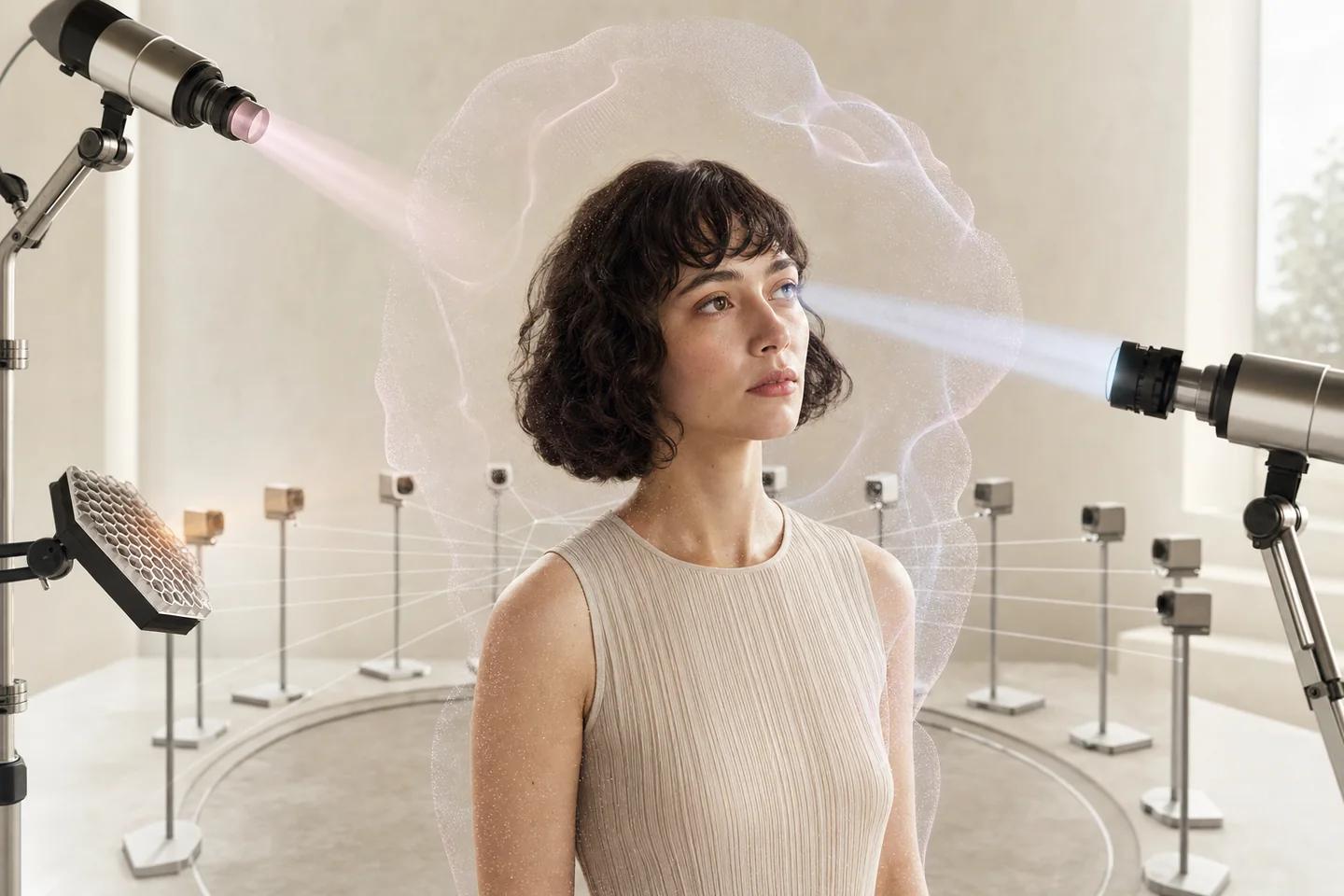
How does neural rendering control video portraits?
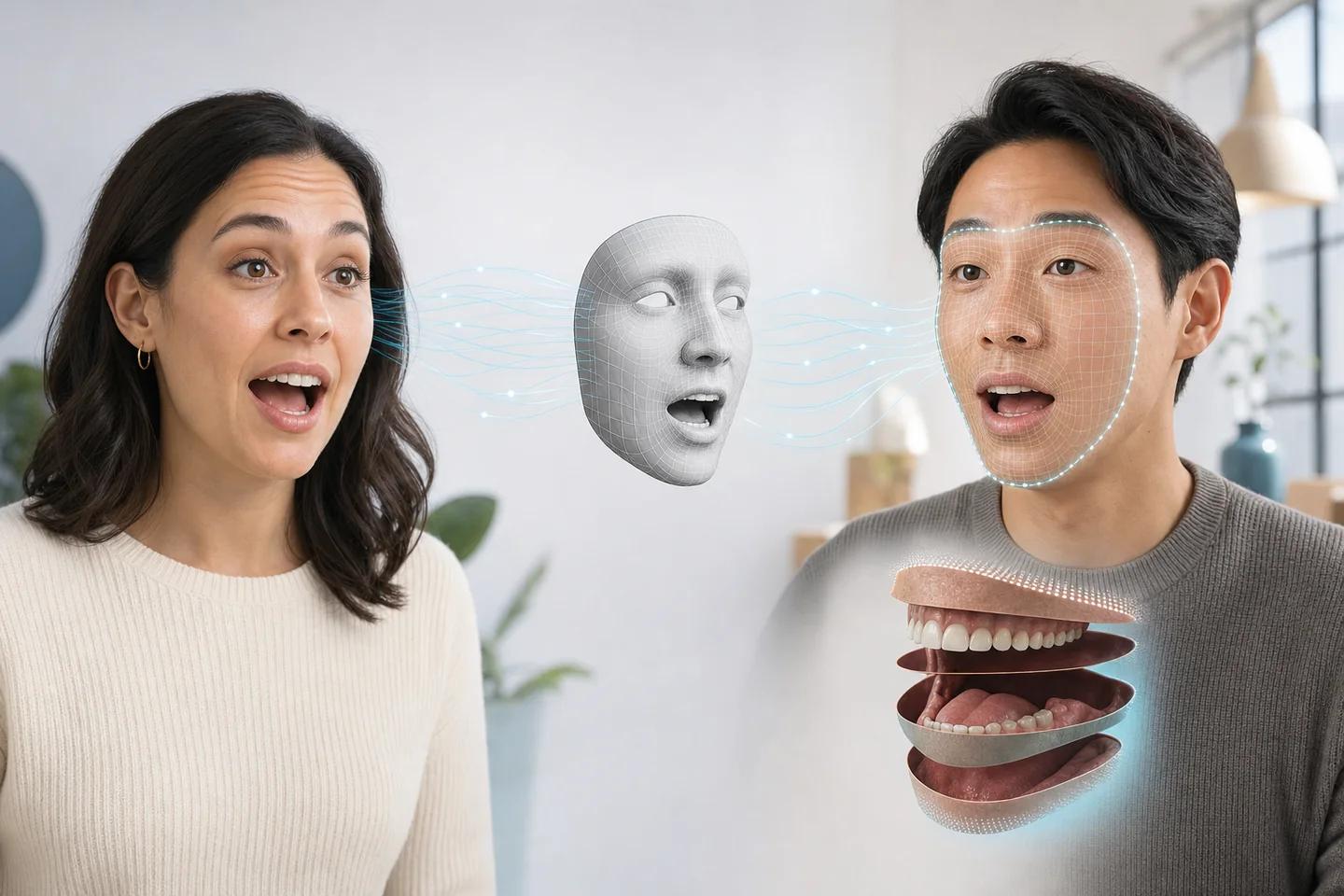
Neural rendering controls a video portrait by splitting the job in two. An explicit model, usually a parametric 3D face, carries the controls: head position and rotation, expression, eye gaze, blinks. A learned network then turns a rough rendering of those controls into photorealistic frames of a specific person. Change a parameter and the output changes in a predictable way, which is what makes the method controllable rather than a black box.
Deep Video Portraits, published at SIGGRAPH 2018 by Hyeongwoo Kim, Christian Theobalt and colleagues, is the clearest example. Its authors say it was the first method to transfer a source actor's full 3D head position, head rotation, facial expression, eye gaze and eye blinking to a target portrait video. A space-time network, trained adversarially, took synthetic renderings of the face model as input and predicted realistic video frames of the target actor.
How did neural renderers make video portraits more controllable?
They moved the realism from hand-built graphics into a learned renderer, which freed the controls. Face2Face in 2016 re-rendered a face model and composited it into the original frame, so it could change expression but not move the head. Deep Video Portraits learned to render the whole portrait for a given set of parameters, so head pose, gaze and blinking could all be driven by another person's performance. The authors demonstrated interactive full-head reenactment and high-fidelity visual dubbing, and report a user study in which viewers found the edits hard to detect.
The control came with clear boundaries. The method did not explicitly model hair, body or background, and it needed footage of the target to train the renderer for that person. The parameters were also only as good as the face model's fit: poses or expressions the model could not represent, the renderer could not reproduce faithfully.
How did 3D neural representations change portrait rendering?
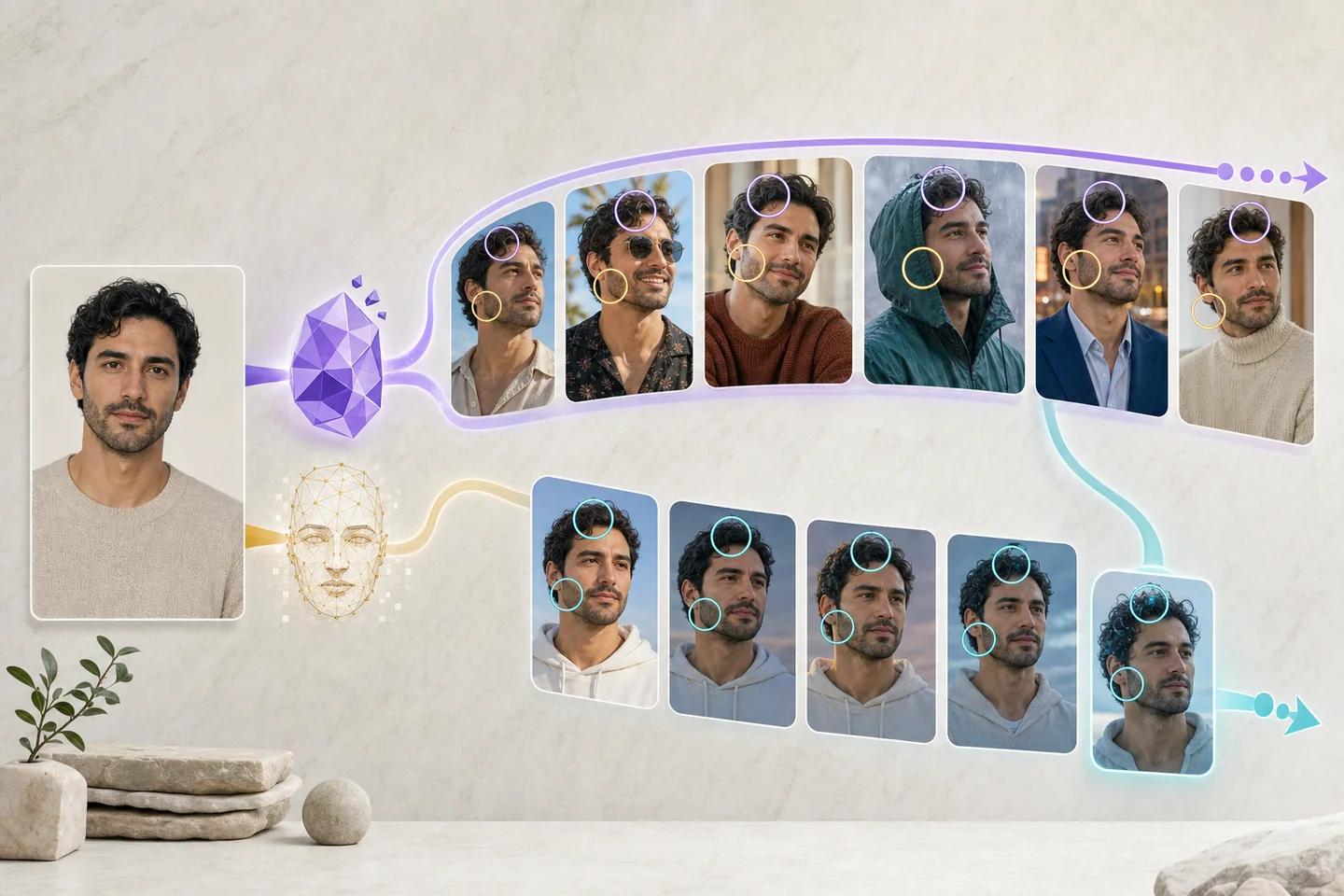
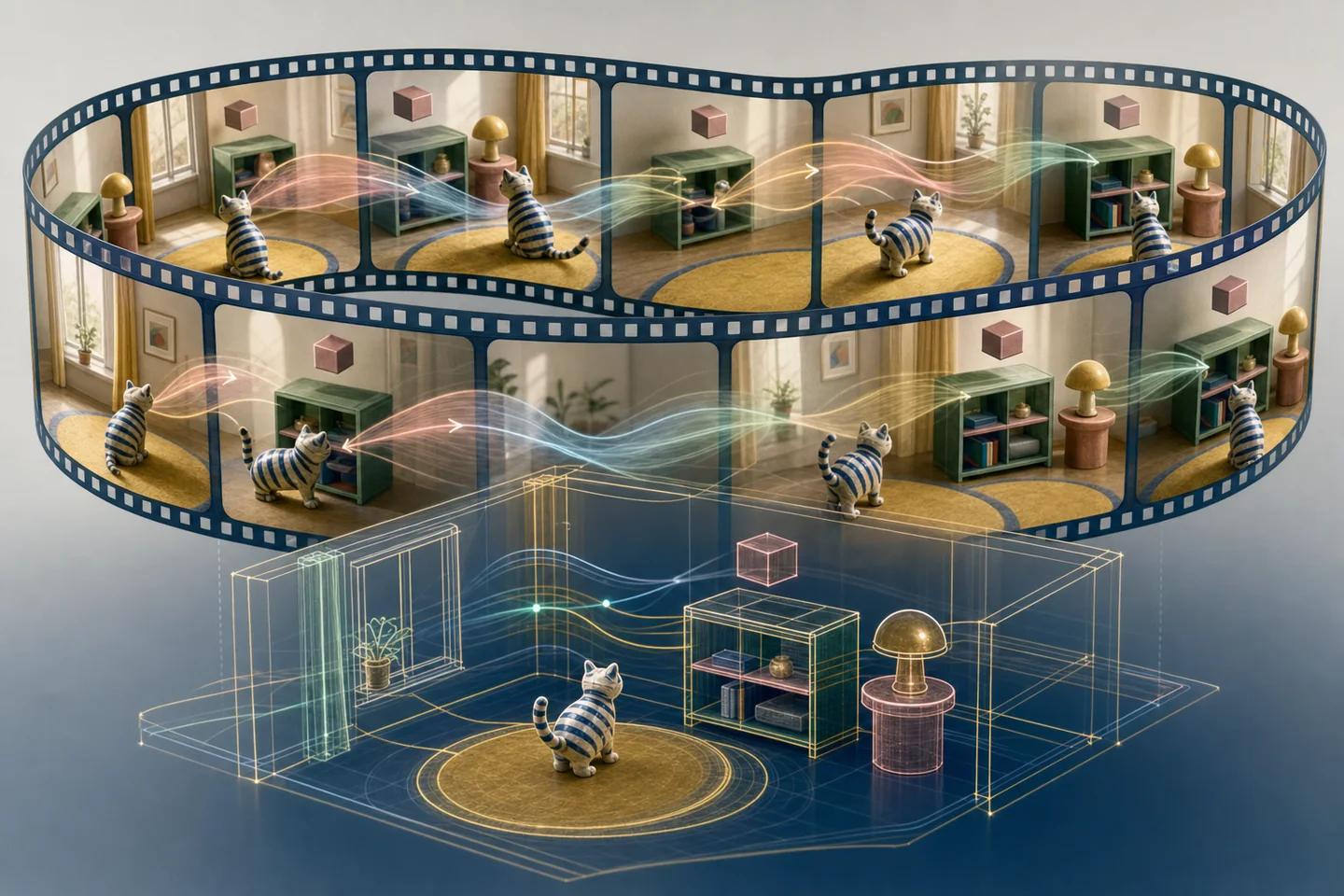
From 2020, researchers began storing the person and scene in a learned 3D representation rather than rendering 2D frames from a mesh. NeRF, posted in March 2020, represented a scene as a fully connected network that maps a 3D location and viewing direction to density and colour, rendered with classic volume rendering and trained only from posed images. NerFACE, presented at CVPR 2021, made that representation dynamic for faces, reconstructing a controllable 4D facial avatar from monocular video and driving it with expression parameters.
Speed followed. 3D Gaussian Splatting, published in ACM Transactions on Graphics in July 2023, represented scenes with 3D Gaussians and reported real-time novel-view rendering at 30 frames per second or more at 1080p. Meanwhile 2D methods became lighter and more general; LivePortrait reported about 12.8 ms per frame on an RTX 4090 for animating a portrait from a single image.
| Year | Method | Representation | Control |
|---|---|---|---|
| 2016 | Face2Face | Parametric face model, composited | Expression only |
| 2018 | Deep Video Portraits | Face model rendering plus learned 2D renderer | Head pose, expression, gaze, blinks |
| 2020 | NeRF | Neural radiance field from posed images | Novel viewpoints of a static scene |
| 2021 | NerFACE | Dynamic radiance field for one face from monocular video | Expression and pose of a 4D avatar |
| 2023 | 3D Gaussian Splatting | Explicit 3D Gaussians | Real-time viewpoints at 1080p |
What controllable rendering means for impersonation risk
Person-specific neural renderers produce high quality but need training footage of the target, often minutes of video with varied expressions and poses. That suits targets with abundant public video, such as executives, officials and creators, and suits a planned attack better than an opportunistic one. One-image methods such as LivePortrait lower the data requirement sharply, at some cost in fidelity under large head turns.
Controllability also changes what an attacker can do in a live setting. If a renderer can follow head pose, gaze and blinks from a performer in real time, the usual request to turn your head or blink proves less than it used to. Challenge and response still helps, but it should test things the renderer was not trained on, and it should sit alongside verification through a separate channel.
Where neural portraits tend to leave evidence
Evidence clusters where the model has the least support. Hair, ears and the edge of the face against the background are hard because early renderers did not model them explicitly. Teeth and the inner mouth are hard because they appear only in some expressions. Extreme poses, side lighting, occlusion by hands and fast motion push the renderer outside its training distribution. Over time, a learned renderer can also show slight inconsistency in fine texture between frames.
Compression hides much of this. Conferencing software and social platforms resize, denoise and re-encode faces, which smooths both genuine and rendered detail. Detectors should be tested on video that has been through the same processing as the media they will see in production.
What the research record does and does not show
The papers show that controllable, photorealistic portrait rendering is possible under their capture conditions and training budgets. They do not report how often such systems succeed against verification processes, nor how they perform on low-quality webcams and mobile networks. Visual similarity between a suspect clip and a published demo is not evidence that a specific method was used.
How Neural Defend checks rendered and reenacted portraits
NeuroVerify analyses face images and video in one API call across six signals, including Face Manipulation Detection, Live Presence Verification and AI Generative Model Analysis, and returns one unified risk score with signal-level evidence in under 200 ms at p95 on eligible image requests under defined test conditions. Your policy decides whether to approve, step up or review. For investigations, NeuroDetect displays heatmaps and attention views over the frames and regions behind a finding, such as hairlines and mouth interiors, and exports a forensic report with model context and stated uncertainty.
Deployment can be a managed cloud API, private cloud or VPC, secure container, on-premises or air-gapped, which matters when the footage under review is sensitive. Test against rendered portraits made from your own scenario before relying on any detector for live decisions.
Evidence boundary
Limitations
- Research papers report results under their own capture conditions and do not measure attack success against real verification systems.
- Evidence locations described here are tendencies, not guarantees, and compression can remove them from genuine and rendered video alike.
- Detector performance on rendered portraits should be validated on footage that matches your channel.
Source record
Sources and references
- arXivDeep Video Portraits (SIGGRAPH 2018)Published May 29, 2018. Verified October 19, 2026.
- CVF Open AccessDynamic Neural Radiance Fields for Monocular 4D Facial Avatar ReconstructionVerified August 7, 2026.
- arXivNeRF: Representing Scenes as Neural Radiance Fields for View SynthesisPublished March 19, 2020. Verified October 19, 2026.
- arXiv3D Gaussian Splatting for Real-Time Radiance Field RenderingPublished August 8, 2023. Verified October 19, 2026.
- arXivFace2Face: Real-time Face Capture and Reenactment of RGB Videos (CVPR 2016)Published July 29, 2020. Verified October 19, 2026.
- arXivLivePortrait: Efficient Portrait Animation with Stitching and Retargeting ControlPublished July 3, 2024. Verified October 19, 2026.