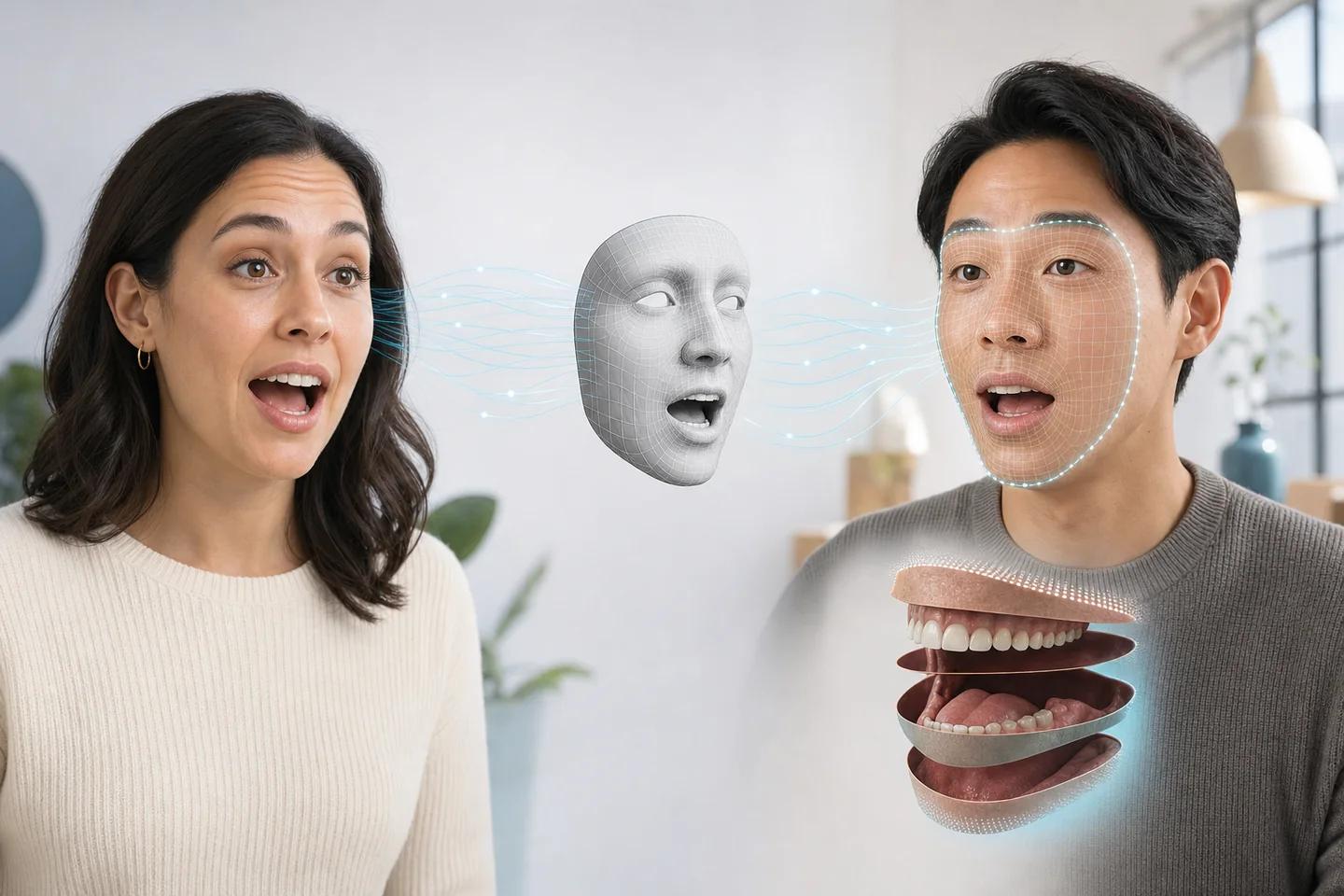
How did Face2Face real-time reenactment work?
Face2Face, by Justus Thies, Michael Zollhöfer, Marc Stamminger, Christian Theobalt and Matthias Nießner, was presented at CVPR 2016. It took a live video of a source actor from an ordinary webcam and made the face in a separate target video copy that actor's expressions, frame by frame, as it happened. The target kept its own identity, head and background; only the expression changed.
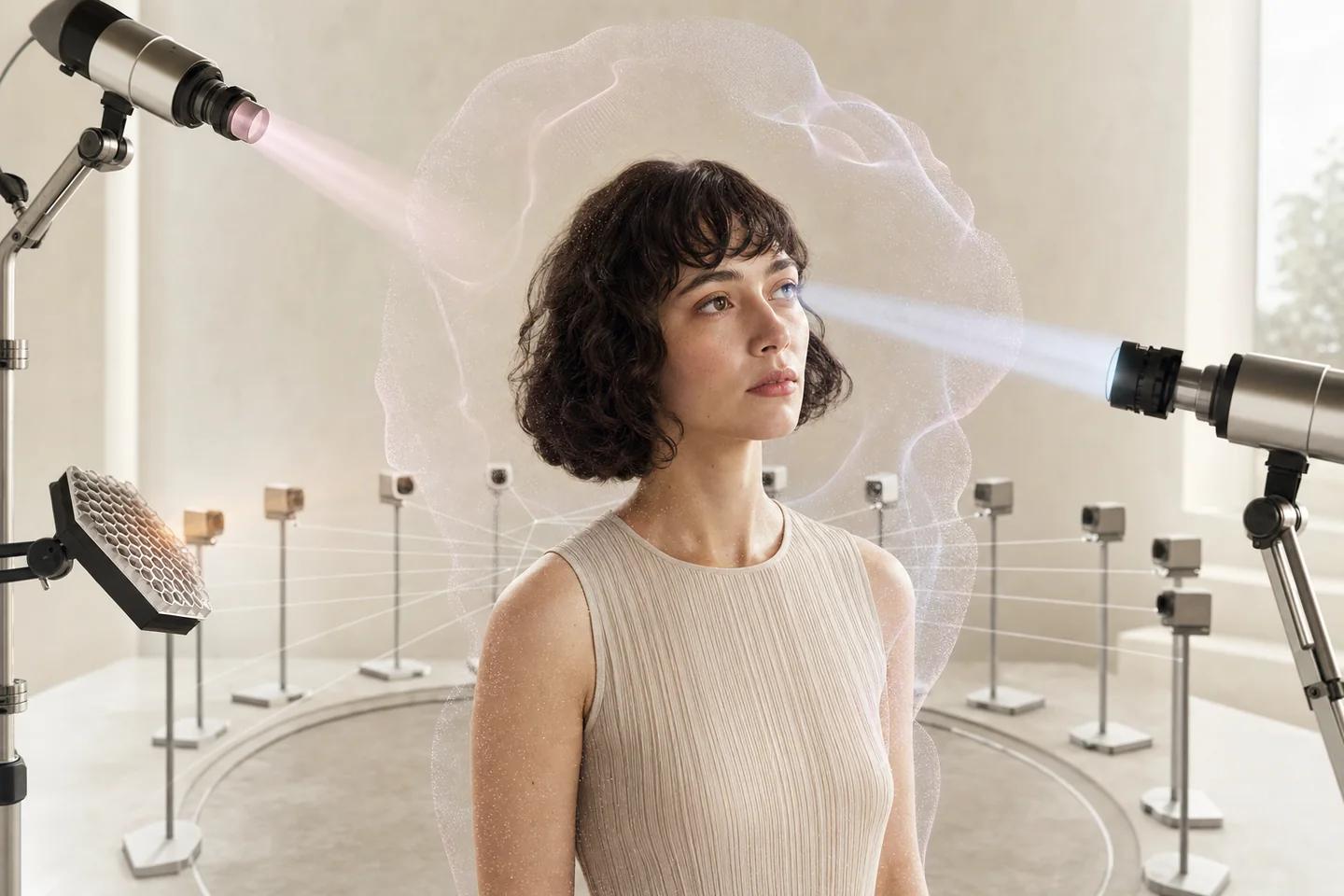
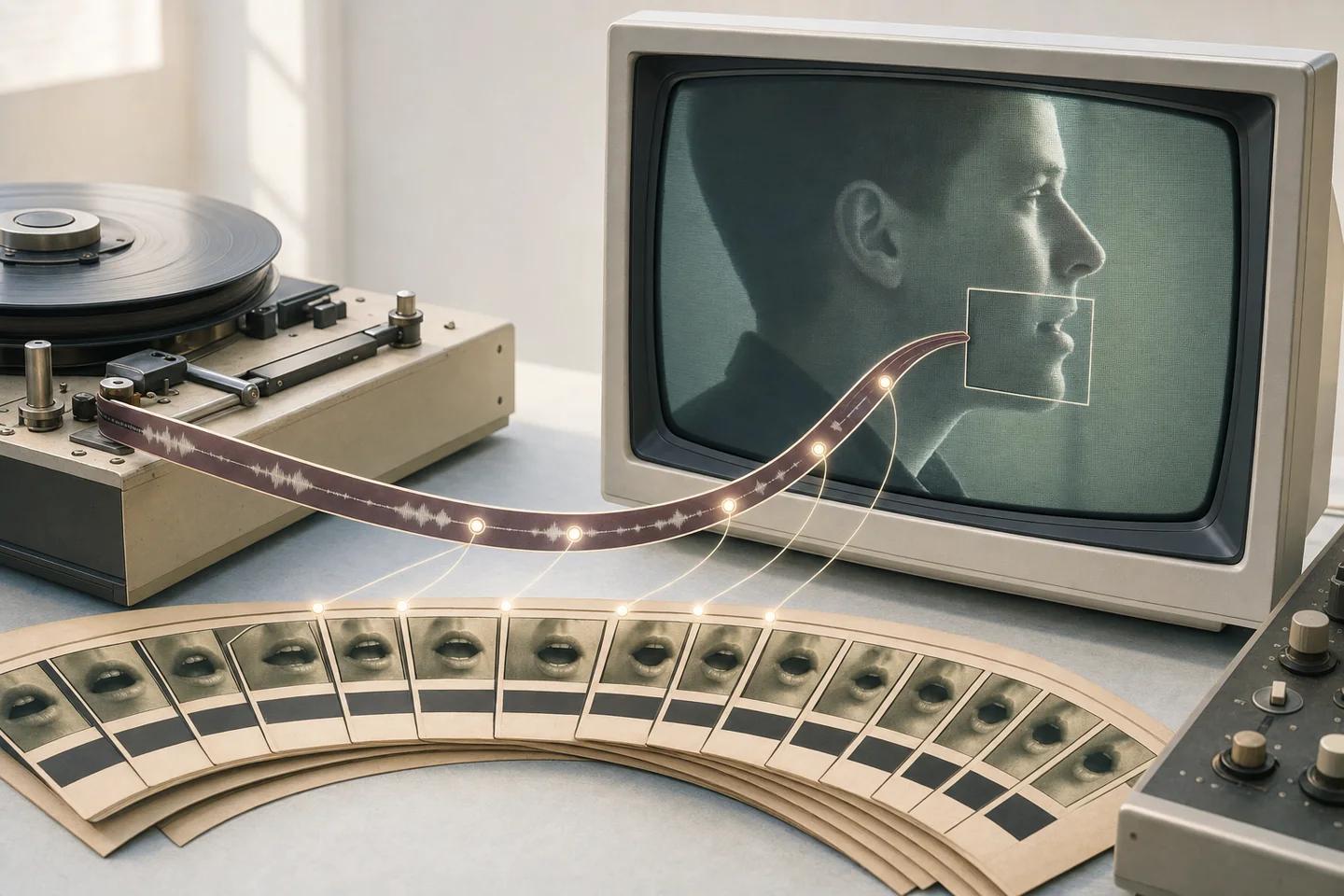
The pipeline had four parts. It tracked both faces with a parametric 3D face model, fitting expression and pose by dense photometric consistency, meaning it compared every rendered pixel of the model with the real image. It recovered the target's identity from monocular video through what the authors call non-rigid model-based bundling. It transferred the source's expression onto the target's face model. Finally, it fetched a matching mouth interior from elsewhere in the target video, warped it into place, and re-rendered the face to match the scene's estimated lighting before compositing it back into the frame.
How did Face2Face make facial reenactment real time in 2016?
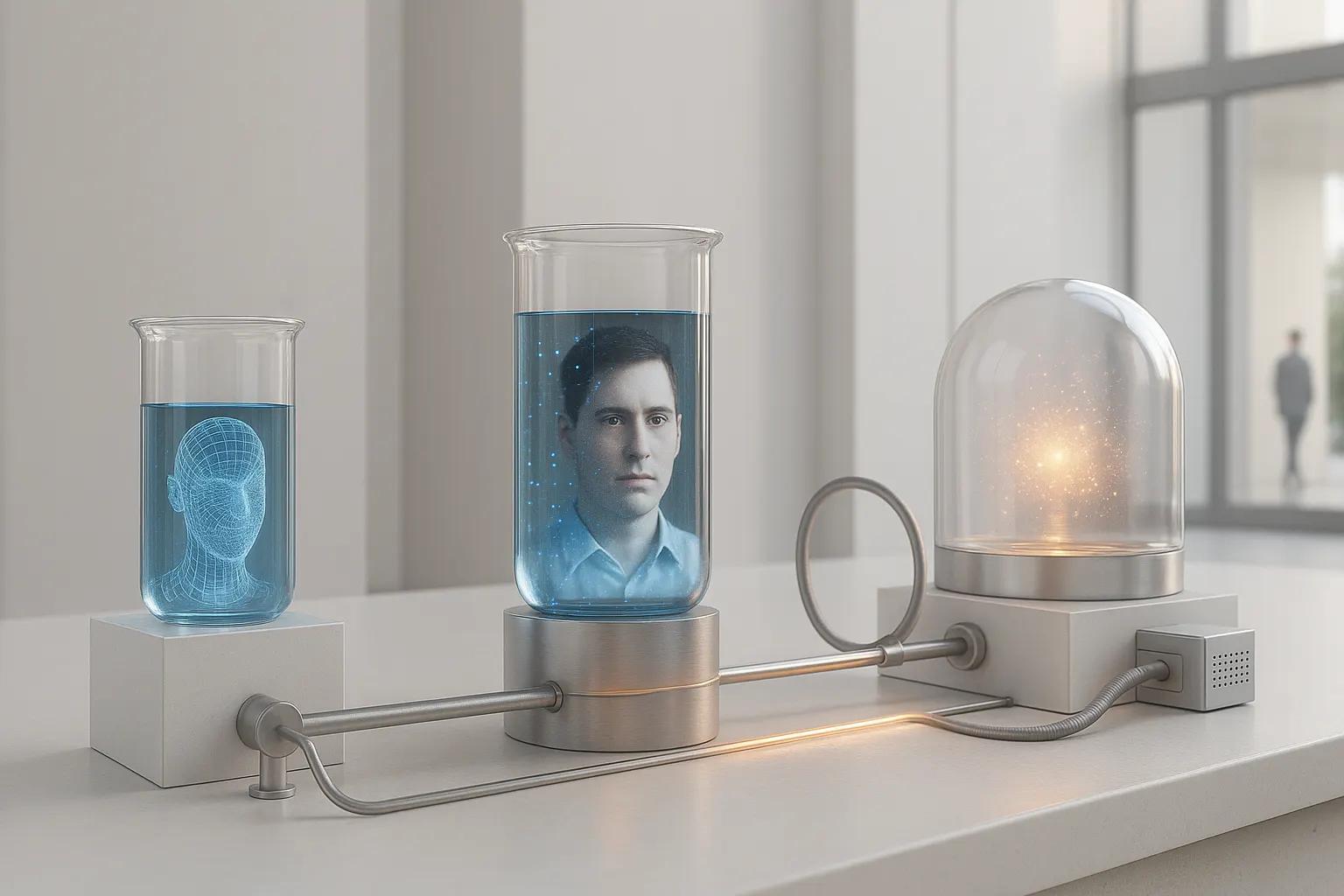
Face2Face reached real time by solving tracking and rendering as a fast optimisation on a graphics processor rather than as an offline edit. The model-based approach kept the number of unknowns small: a set of identity, expression, pose and lighting parameters instead of millions of free pixels. That let the system fit and render each frame quickly enough for live use, and the authors demonstrated it by reenacting YouTube videos live from a webcam feed.
The parametric face model behind it descends from the 3D morphable model that Volker Blanz and Thomas Vetter described at SIGGRAPH 1999, which represented faces as combinations of shape and texture learned from scans. Face2Face showed that this kind of model, fitted fast enough, could drive convincing manipulation in an interactive loop. Offline editors can fix a bad frame; a live system has to get every frame acceptable on the first attempt.
How is reenactment different from a face swap?
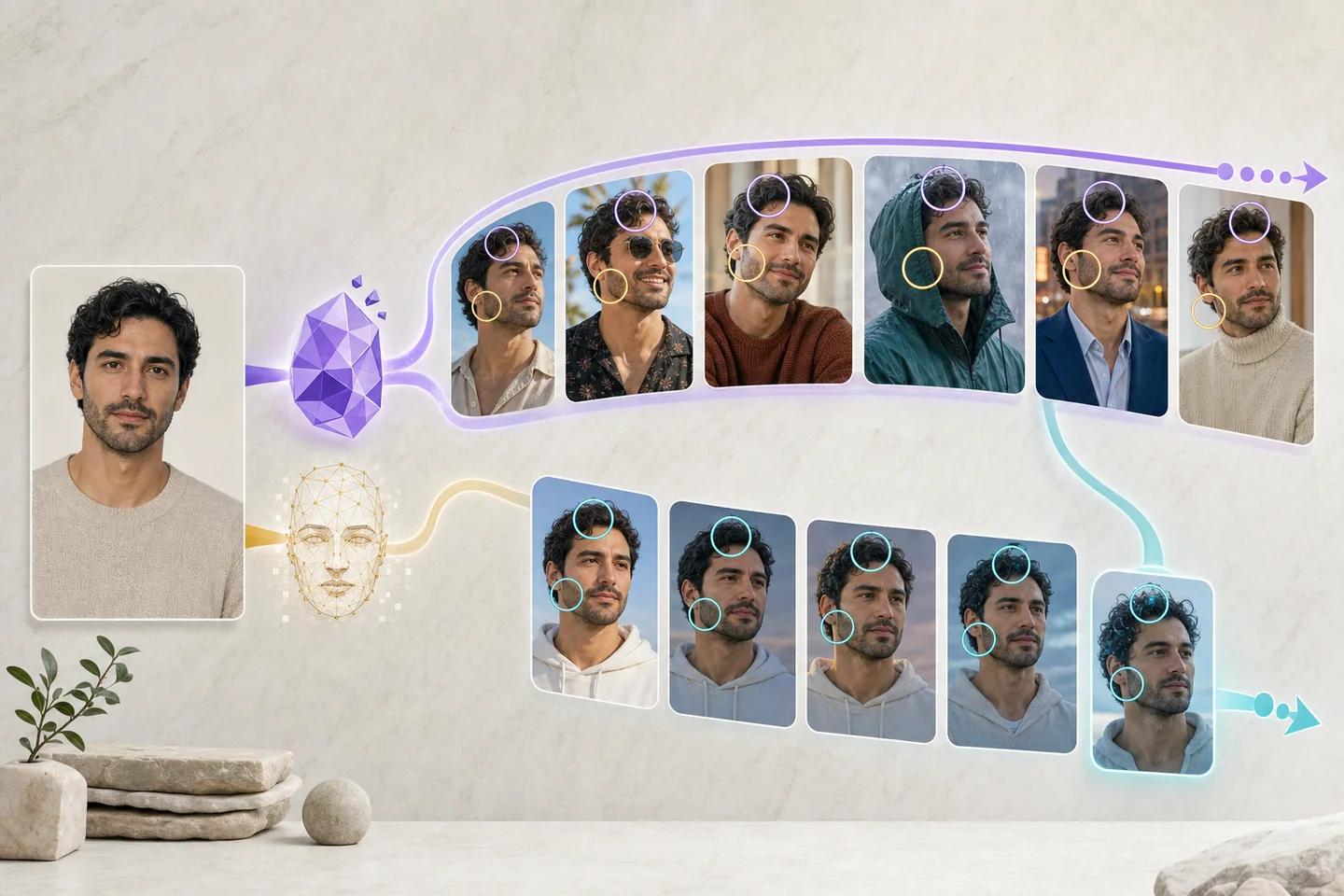
Reenactment changes what a face does; a face swap changes whose face it is. In Face2Face the target remained the target, so the threat was putting words or expressions on a real person's footage, not presenting a different identity. Later systems widened the control and reduced the setup, as the table shows.
| Method | What changes | What stays captured |
|---|---|---|
| Face2Face (CVPR 2016) | Facial expression and mouth, re-rendered under scene lighting | Target identity, head pose, body, background |
| Face swap | Identity of the face region | Expression, pose and scene of the original footage |
| Deep Video Portraits (SIGGRAPH 2018) | Full 3D head position and rotation, expression, eye gaze and blinking | Target appearance; hair, body and background not explicitly modelled |
| LivePortrait (2024) | Expression and head pose animated from one portrait | The source portrait's appearance; about 12.8 ms per frame on an RTX 4090 |
Where reenactment edits tend to show
The mouth is the hardest region. New expressions expose teeth and the inner mouth, which a surface face model does not explain, so Face2Face had to borrow and warp a mouth interior from the target footage. Lighting is the second weak point: the re-rendered face must agree with the illumination of each frame, and fitted lighting models struggle with hard shadows or strong side light. Extreme head turns, occlusion by hands or hair, and fast motion all reduce the support the face model has.
None of these cues is unique to Face2Face. A blurred mouth, a lighting mismatch or a shimmering boundary can come from many pipelines, or from video compression on a genuine clip. They are reasons to look closer, not proof of a specific tool.
Why Face2Face became a detection benchmark
Face2Face's open description made it a standard manipulation method in detection research. FaceForensics++, released in January 2019, built a benchmark of over 1.8 million manipulated images using four methods: DeepFakes, Face2Face, FaceSwap and NeuralTextures, at several compression levels. Its authors report that trained detectors clearly outperform human observers, even under strong compression.
That benchmark also exposed a lasting problem. Detectors trained on a fixed set of methods do well on those methods and less well on new ones. Expression reenactment leaves small, local evidence around the mouth and face boundary, which a detector tuned for full-face synthesis can miss. Testing has to include the manipulation types you expect, at the compression your channel applies.
What the 2016 demonstration does not prove
The paper shows technical feasibility under its setup: suitable target footage, a cooperative source actor and controlled capture. It does not measure how often arbitrary live targets, poor cameras, network compression or verification procedures would let a real attack succeed. Conferencing software also resizes, denoises and compresses authentic faces, so live review benefits from challenge and response and from verification through a separate channel, not only from content analysis.
Target footage is also a dependency that is easy to overlook. Face2Face needed video of the target suitable for fitting the face model and for borrowing mouth interiors, plus a source actor willing to perform. That acquisition path differs from one-image animation or text-to-video generation, and it shapes who could realistically misuse the method in 2016: someone with good footage of the target and time to set up the system.
How Neural Defend checks for reenacted and swapped faces
NeuroVerify screens face images and video in one API call across six signals. Face Manipulation Detection targets edited or swapped faces, Live Presence Verification checks that a live person is in front of the camera, and AI Pixel-Level Manipulation looks for locally altered regions such as a replaced mouth. It returns one risk score with signal-level evidence, and your policy decides the outcome.
For recorded footage under investigation, NeuroDetect shows heatmaps and attention views down to individual frames, so an analyst can see whether evidence concentrates around the mouth and face boundary, and exports a forensic report with model and version context. Neural Defend's ARCAS 1B paper reports results on six image benchmarks; for video reenactment, validate on footage from your own channel.
Evidence boundary
Limitations
- The 2016 paper demonstrates feasibility under controlled conditions and does not measure real-world attack success rates.
- Mouth, lighting and boundary cues are not unique to Face2Face and can also arise from compression of genuine video.
- Detectors trained on FaceForensics++ methods may not generalise to newer reenactment systems without further testing.
Source record
Sources and references
- arXivFace2Face: Real-time Face Capture and Reenactment of RGB Videos (CVPR 2016)Published July 29, 2020. Verified October 19, 2026.
- CVF Open AccessFace2Face: Real-Time Face Capture and Reenactment of RGB VideosVerified August 7, 2026.
- ACM Digital LibraryA Morphable Model for the Synthesis of 3D FacesVerified August 7, 2026.
- arXivDeep Video PortraitsPublished May 29, 2018. Verified October 19, 2026.
- arXivFaceForensics++: Learning to Detect Manipulated Facial ImagesPublished January 25, 2019. Verified October 19, 2026.
- arXivLivePortrait: Efficient Portrait Animation with Stitching and Retargeting ControlPublished July 3, 2024. Verified October 19, 2026.