
Does Reverse Image Search Help Detect Deepfakes?
Reverse image search helps with deepfakes indirectly. It does not analyse whether pixels were synthesised. It looks for other copies of the same or a similar picture across the web. That makes it very good at one kind of deception and nearly useless against another.
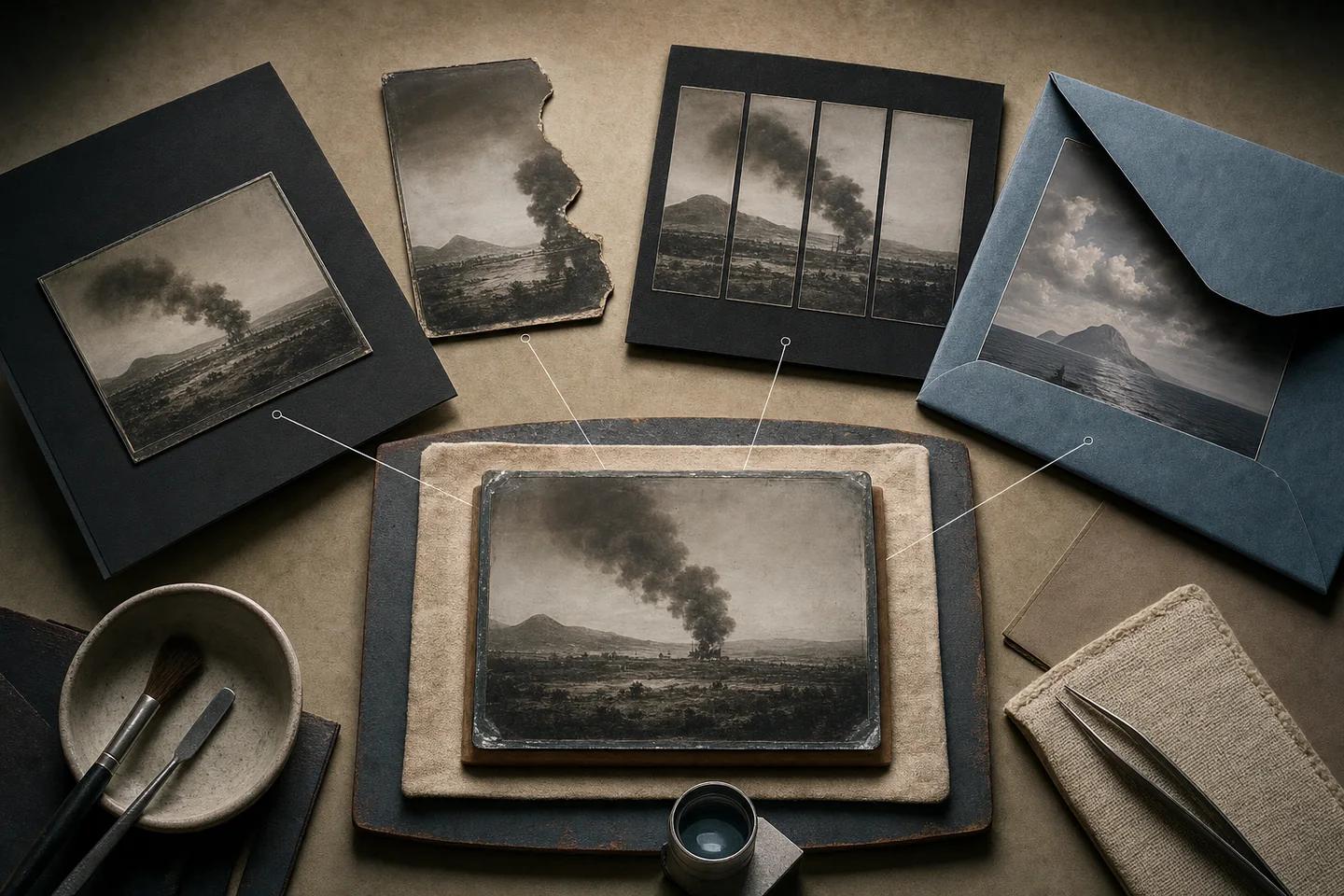
It works well when a fake reuses real material. A face swap usually keeps the body, clothes and background of an existing photo or video, so searching the frame can return the original with a different face. A recycled disaster photo shared as today's event will match older uploads with earlier dates. It works poorly against content generated from scratch, such as a synthetic headshot for a fake profile, because there is no prior copy anywhere to find.
How Does Reverse Image Search Work?
A reverse image search engine converts each indexed image into a compact numerical description of its visual features, then compares your query image against that index and returns the closest matches. Because the comparison is about visual similarity, many engines still find an image after resizing, recompression or light colour changes. Heavy crops, mirroring, overlays and large edits reduce the chance of a match.
Different engines index different parts of the web and weight results differently, so one engine can find what another misses. NIST's AI 100-4 report (November 2024) lists Google reverse image search among digital content transparency tools as a retrieval method that finds perceptually similar images, including the image source. Google also said on 17 September 2024 that its About this image feature, in Google Images, Lens and Circle to Search, would show whether an image carrying C2PA metadata was created or edited with AI tools.
| Tool | Useful for | Watch out for |
|---|---|---|
| Google Images and Lens | Broad web coverage, visually similar results, About this image context and C2PA labels where present | Results favour popular pages over the oldest upload |
| Bing Visual Search | A second index for cross-checking | Coverage differs from Google's |
| TinEye | Sorting matches to find the earliest indexed copy | Smaller index; weaker on heavily edited versions |
| Yandex Images | A further index with different regional coverage | Privacy and legal limits on face search in some workplaces |
| InVID-WeVerify plugin | Splitting video into keyframes and searching them on several engines at once | Keyframes may miss the frame that was altered |
How Reverse Image Search Helps Verification
Used step by step, reverse image search builds a publication timeline, and that timeline is often what settles a dispute about media.
For video, take several keyframes instead of a single thumbnail. The InVID-WeVerify browser plugin, built in the EU InVID project with AFP Medialab and maintained within the WeVerify Horizon 2020 project, splits videos from YouTube, Twitter and Facebook into keyframes and runs reverse searches on Google, Yandex, TinEye and Baidu. Its magnifier and metadata reader help with the next steps.
- Save the image or video as received, with the URL and the account that posted it, before running any search.
- Search the full image, then crops of distinctive parts: a face, a sign, a building, a logo-free background detail.
- Run the same query on at least two engines, because indexes differ.
- Sort matches by date where the tool allows, and open the oldest reliable copy to read its original caption, location and uploader.
- Compare the circulating version with the earliest one for swapped faces, removed objects, changed text or a tighter crop.
- Record every query, engine, date and result so another person can repeat the search.
When Does Reverse Image Search Fail?
The biggest failure is new content. In its public service announcement of 3 December 2024, the FBI's Internet Crime Complaint Center warned that criminals use generative AI to create realistic profile photos for romance, investment and confidence scams, and to fabricate images of disasters to solicit donations. A brand-new synthetic face returns no matches, and a victim may read that silence as a sign the person is real.
Search also fails when the source lives somewhere engines cannot see: private messaging groups, closed accounts, internal company systems or a phone's camera roll. Live selfies in onboarding and frames from a video call have never been published, so there is nothing to compare against. A match can also mislead. The oldest copy an engine has indexed is not necessarily the original, and an attacker can seed an early copy to fake a history.
Treat a match as a lead and an empty result as inconclusive. Neither tells you whether the pixels were altered.
What Should You Use Alongside Reverse Image Search?
Reverse search covers history. Three other checks cover what it cannot. Provenance data, such as C2PA Content Credentials, records signed claims about how a file was made and edited, when a capture device or editing tool adds them and the platform keeps them. Metadata in the file itself can show camera model, software and timestamps, although it is easy to strip or forge. Content analysis examines the pixels for traces of generation or editing and works even when the file has no history at all.
The order follows cost. Searching takes a minute and settles many recycled-image cases. Provenance and metadata take a few more. Forensic analysis is the step for images that matter and that the first checks could not resolve, and it is the only one of the four that applies to a freshly generated fake or a live selfie.
How Does Neural Defend Help When Search Finds Nothing?
NeuroDetect is built for the image that has no earlier copy. An investigator uploads the authorized file into a case, and the analysis returns findings with model and version context, explainability heatmaps that mark the regions behind the result, and an LLM-assisted summary linked to that evidence. The analyst records the reverse search results alongside, makes the final call, and exports a forensic report covering observations, uncertainty and provenance.
Where images arrive in volume, such as selfies in onboarding or photos in insurance claims, NeuroVerify checks each one in a single API call across six signals, including AI Generative Model Analysis and AI Pixel-Level Manipulation, in under 200 ms p95 on eligible image requests. On the public VendorBench-100 benchmark of 100 hard still images, Neural Defend ranked first of 36 systems with an MCC of 0.876. One VendorBench author also co-wrote Neural Defend's ARCAS 1B paper, and the corpus and results are public so anyone can rerun them.
Evidence boundary
Limitations
- Reverse image search cannot determine whether an image was generated or edited; it only finds other copies.
- Content that was never published online, such as private messages, live selfies and video call frames, has nothing to match against.
- The earliest indexed copy may not be the original, and coverage differs between engines.
- VendorBench-100 tests still images only and does not measure video, audio or injection attacks.
Source record
Sources and references
- National Institute of Standards and TechnologyReducing Risks Posed by Synthetic Content (NIST AI 100-4)Verified October 19, 2026.
- GoogleHow we're increasing transparency for gen AI content with the C2PAPublished September 17, 2024. Verified October 19, 2026.
- InVID ProjectInVID Verification PluginVerified October 19, 2026.
- FBI Internet Crime Complaint CenterCriminals Use Generative Artificial Intelligence to Facilitate Financial Fraud (I-120324-PSA)Published December 3, 2024. Verified October 19, 2026.
- Cybersecurity and Infrastructure Security AgencyTactics of DisinformationVerified August 7, 2026.
- arXivVendorBench-100: A Unified Cross-Paradigm Benchmark for Deepfake Image Detection (v2)Published July 29, 2026. Verified October 19, 2026.