
Subscriber submits details → Document and selfie captured → Face matched to record → SIM activated
Each step passes. None of them asked whether the selfie was generated.
Telecom / NeuroVerify
Operators now activate SIMs, approve SIM swaps and recover accounts through selfies, video and voice. Attackers use synthetic faces and cloned voices at exactly those moments. NeuroVerify checks that media and returns one risk score with signal-level evidence.
It fits the self-service or retail capture step you already run, with one API call and no new step for the subscriber.
NeuroVerify does not verify identity documents, check government registries or approve activations; it adds authenticity evidence to your own policy.
The gap
For most people, a phone number is the recovery channel for their bank, email and wallet. Whoever controls it can reset the rest. Telecom operators therefore sit on a high-value identity decision every time they activate a SIM, approve a swap or port a number.
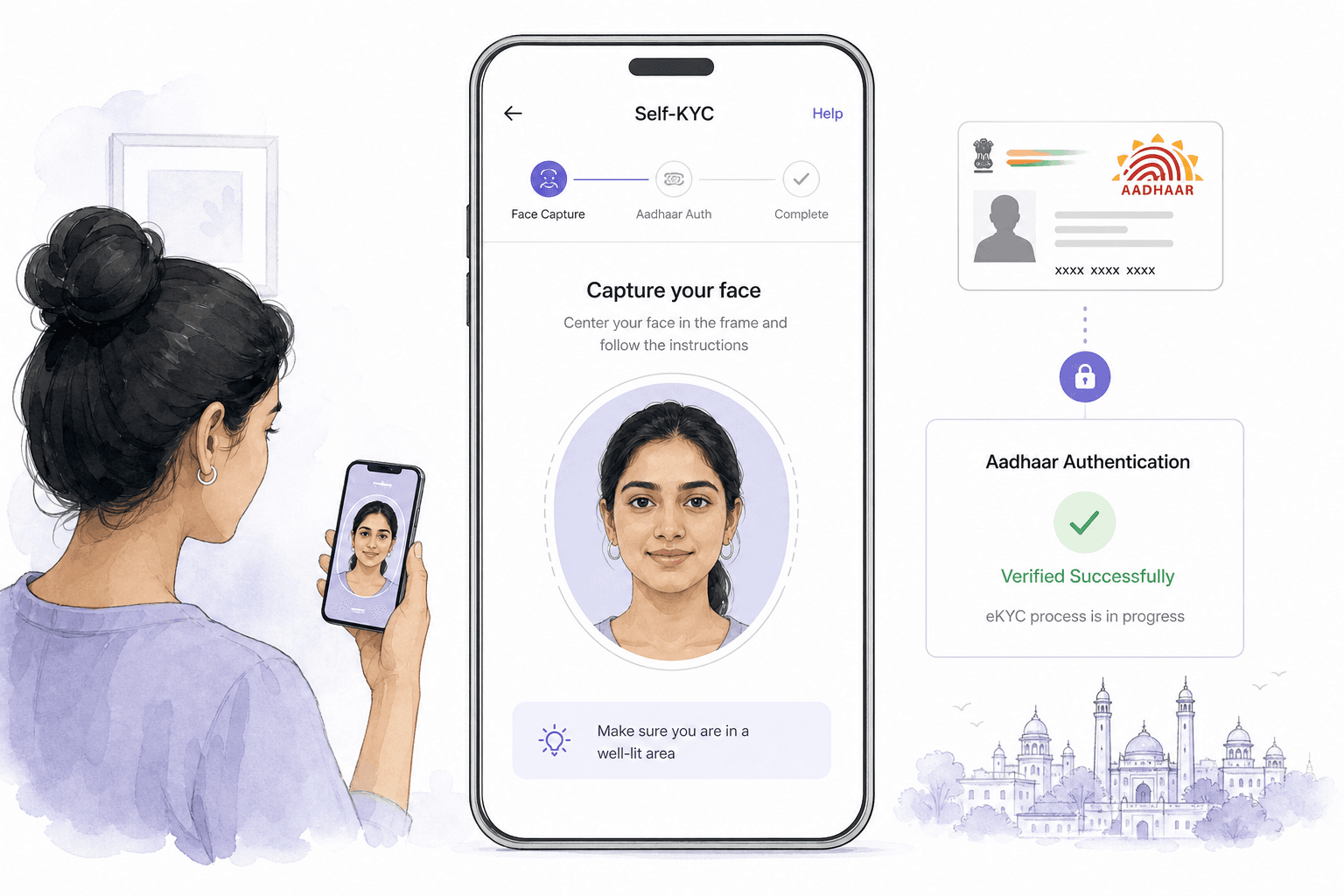
To scale, operators have moved those decisions to self-service apps, retail point-of-sale devices and call centres. Many regions allow a selfie, or a short video, matched to an identity document or registry record. Some operators also verify callers by voice.
Selfie and liveness checks are usually tuned for physical spoofs, such as a photo of a photo. A generated face or an injected camera feed does not look like that.
Face match confirms a resemblance to a document or record, not that the capture was real.
Voice checks in contact centres can be fooled by cloned speech, and agents cannot reliably hear the difference.
Retail and partner channels extend capture to devices and staff the operator does not fully control.
Subscriber submits details → Document and selfie captured → Face matched to record → SIM activated
Each step passes. None of them asked whether the selfie was generated.
See deepfake detection for telecommunications for the sector background.
Threats
These are attack techniques, not claims about any operator. Each turns a fake face or voice into control of a number or an account.
A generated or edited face image is submitted with stolen details to open lines for fraud, mule use or resale.
A virtual camera supplies prepared video so the app receives a clean capture that never came from a lens.
A real-time swap lets an attacker pass an agent-assisted video check as the account holder.
A cloned voice calls support to move a number to a new SIM or reset credentials, then intercepts codes.
Prepared media is fed through a point-of-sale tablet or agent app, relying on weak oversight at the edge.
Many accounts are opened with generated faces to build a pool of numbers. Each looks acceptable alone.
Regulators and standards bodies increasingly treat remote identity proofing as a risk-based control. FATF digital identity guidance is a good global reference; see FATF digital identity guidance.
NeuroVerify supports your controls with evidence. Your policy decides what happens to each activation.
Where NeuroVerify fits
NeuroVerify runs after your app, store or call flow captures a selfie, video or voice sample, and before your policy approves the action. One request checks for deepfakes and manipulation beyond liveness.
Details entered → Document and selfie → Face match → SIM activated
No authenticity signal for the selfie.
Details entered → Document and selfie → NeuroVerify risk score → Face match → SIM activated or reviewed
One call added to the capture step you already run.
- Visual Safety Screening - Live Presence Verification - Face Manipulation Detection - AI Generative Model Analysis - AI Pixel-Level Manipulation - AI Content Compliance
The same API screens voice and face media in SIM swap, number porting and account recovery. See claims, refunds and account recovery and NeuroVerify.
Keep the selfie, video or voice capture in your app, store tablet or contact centre.
Post it to NeuroVerify from your backend, a native mobile SDK or the REST API.
Receive one risk score with signal-level evidence to store against the subscriber record.
Activate, send to manual review, or step up verification for high-risk scores, using your own thresholds.
What you get
Screening selfies and voice at activation, swap and recovery blocks fraud at the point where it becomes account takeover.
The same API checks faces, video and audio, so each channel does not need a separate tool.
Native SDKs for Android/Kotlin, iOS/Swift and Flutter, plus backend SDKs, drop into an existing app. Two lines to integrate in the common case.
Under 200 ms p95 on eligible image requests under defined test conditions keeps activation quick.
Managed cloud, private cloud, container, on-premises and air-gapped options suit subscriber data rules.
Questions
NeuroVerify is not meant to sit next to a liveness product as a second vendor. Live Presence Verification is one of the six signals in the same request, alongside Face Manipulation Detection, AI Generative Model Analysis, AI Pixel-Level Manipulation, Visual Safety Screening and AI Content Compliance. It checks selfies, video and voice for deepfakes and manipulation beyond liveness.
Standalone liveness is usually built around physical presentation: a printed photo, a mask, a screen held to a lens. It was not designed to tell you whether the face or voice inside a stream was generated or injected. Many teams keep their existing liveness vendor during evaluation and compare outcomes on their own media before deciding what to retire. See deepfake detection vs liveness detection.
Call it after the selfie, clip or voice sample is captured and before activation, swap or recovery is approved. Send the media you already capture to one REST endpoint, or use a native mobile SDK (Android/Kotlin, iOS/Swift, Flutter) or a backend SDK (Python, TypeScript/Node.js, Go, Java). An MCP server is available for AI agents.
Integration is two lines of code in the common case, and teams can go live in under 24 hours. Your end users see no new step.
No. NeuroVerify analyses face images, video and audio, not documents. Keep your document and registry checks. NeuroVerify protects the selfie and face-match step that those checks depend on.
Yes. NeuroVerify accepts audio as well as face images and video, so you can screen voice samples from support or verification calls. Pattern and scope are worked out with you in evaluation. See audio deepfake detection architecture.
Neural Defend analyses the media you send and returns a risk score with signal-level evidence. Consent, retention and residency stay under your policy. Neural Defend holds ISO/IEC 27001, ISO/IEC 27701, ISO/IEC 42001 and SOC 2 Type II certifications.
Read the product data handling page and the trust centre for specifics, and ask us for the details your security review needs.
NeuroVerify returns in under 200 ms p95 on eligible image requests under defined test conditions. The methodology is available on request.
Latency for video and audio depends on length and deployment, so we measure it with you on your own traffic during evaluation.
Yes, and it is the only test that counts. Published benchmarks do not reflect your devices, codecs or compression. Neural Defend ranks first of 36 systems on VendorBench-100 (MCC 0.876 against 0.646 for the next-best vendor), but your subscriber and call media is the better yardstick.
Bring representative genuine and suspected-fake samples and your current decision states, and we will run them through the API with you.
Evaluate NeuroVerify
Send genuine and suspected-fake selfies and voice samples through NeuroVerify. We will show the scores and signals and help set thresholds for activation, swap and recovery.