
How does mule account enrollment with synthetic media work?
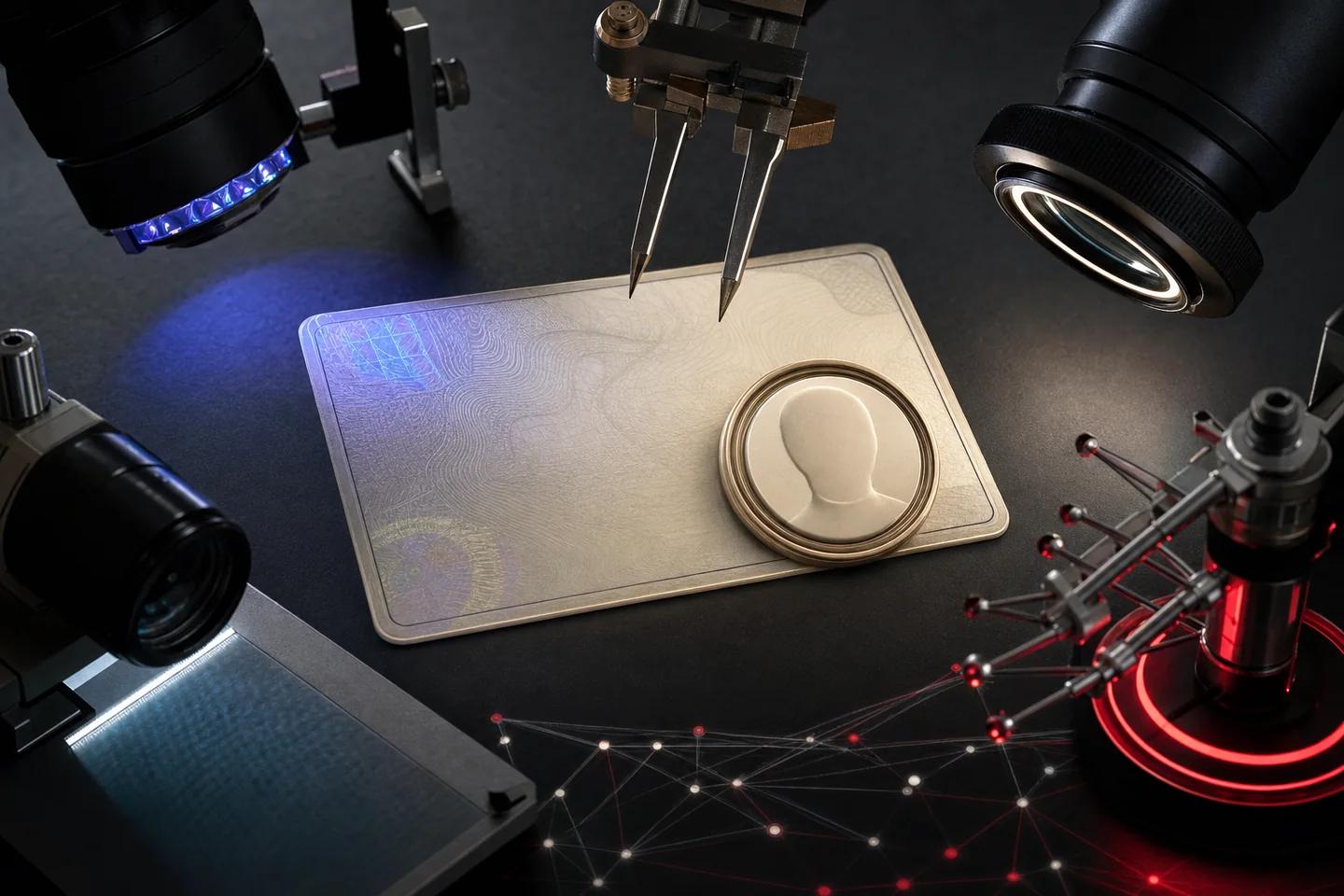
Mule account enrollment with synthetic media works by passing a bank's or fintech's remote onboarding with an identity that either does not exist or belongs to someone who never applied. The network prepares an identity document with an AI-generated or edited photo, pairs it with stolen or invented personal data, and submits a selfie or liveness video that matches the document photo, either by face-swapping onto a real person or generating the face outright. Once the account is open, it becomes infrastructure for other crimes.
FinCEN's alert of 13 November 2024 describes exactly this. Financial institutions reported criminals using generative AI to alter or generate images for driver's licences and passports, and combining those images with stolen or entirely fake personal data to create synthetic identities. FinCEN's analysis of Bank Secrecy Act data showed accounts opened with suspected GenAI identities being used to receive and launder proceeds from online scams, check fraud, credit card fraud, authorized push payment fraud, loan fraud and unemployment fraud, and being used as funnel accounts.
| Step | What the network submits | Synthetic media role | Control |
|---|---|---|---|
| Identity creation | Stolen or fabricated name, date of birth, address | None, or a generated persona | Data consistency and synthetic identity checks |
| Document | Driver's licence or passport image | AI-generated or edited portrait | Document authenticity checks by a document provider |
| Selfie or liveness | Photo or video matching the document | Face swap, generated face or injected video | Deepfake detection plus capture-integrity checks |
| Activation | First logins, device binding, payee setup | Same face reused across accounts | Device and face-reuse correlation |
| Use | Inbound scam proceeds and rapid outbound transfers | None | Transaction monitoring and network analysis |
Why fraud networks are switching to synthetic identities
Traditional money mules are real people, recruited through fake job ads, romance scams or payment offers, who open accounts in their own names or hand over their credentials. Recruiting them takes time, they can be traced, and they sometimes go to the police. Synthetic media lets a network open accounts without a cooperating person behind each one, or reuse one recruited person's documents with different faces.
FinCEN notes that generative AI has greatly reduced the resources required to produce realistic synthetic content, and that some tools are open source and can be modified to bypass safeguards. The result is that a single operator can attempt many enrollments, varying faces and details to avoid simple duplicate checks.
Red flags for synthetic mule enrollment
FinCEN lists red flags that apply directly to mule enrollment. At onboarding: a customer photo that is internally inconsistent or inconsistent with other identifying information, such as an age that does not fit the face; multiple identity documents that do not match each other; use of a third-party webcam plugin during a live verification, or requests to change communication method because of repeated glitches; a reverse image search that matches a gallery of AI-generated faces; device or location data inconsistent with the documents; and a photo or video flagged by deepfake detection software.
After opening, the alert points to patterns of rapid transactions by new accounts, high payment volumes to higher-risk payees such as gambling sites or digital asset exchanges, high volumes of chargebacks or rejected payments, coordinated activity among multiple similar accounts, and withdrawals immediately after deposit in ways that make payments hard to reverse. FinCEN asks institutions to reference the key term FIN-2024-DEEPFAKEFRAUD in suspicious activity reports.
- Flag the same face, or near-identical faces, appearing under different names.
- Correlate devices, IP ranges and contact details across new accounts.
- Hold or review first outbound transfers on accounts that receive funds immediately after opening.
- Re-review onboarding media when an account later shows mule behaviour.
Investigating a suspected mule network
When an account receives suspected fraud proceeds, preserve the onboarding evidence and transaction records, apply holds or restrictions your authority allows, and coordinate with sending institutions and law enforcement. Then map the network: shared devices, contacts, addresses, beneficiaries, wallet addresses and onboarding artifacts. Record each link with its source and confidence, so another analyst can reproduce it.
Keep victims in view. Mules can be knowing participants, recruited intermediaries, scam victims or people whose identities were stolen. A stolen identity can tie an innocent person to several fraudulent accounts, and a synthetic selfie may have been built from their real photo. Media analysis tells you whether a specific selfie or video was manipulated; it does not tell you who controlled the account afterwards.
How NeuroVerify helps stop synthetic mule enrollment
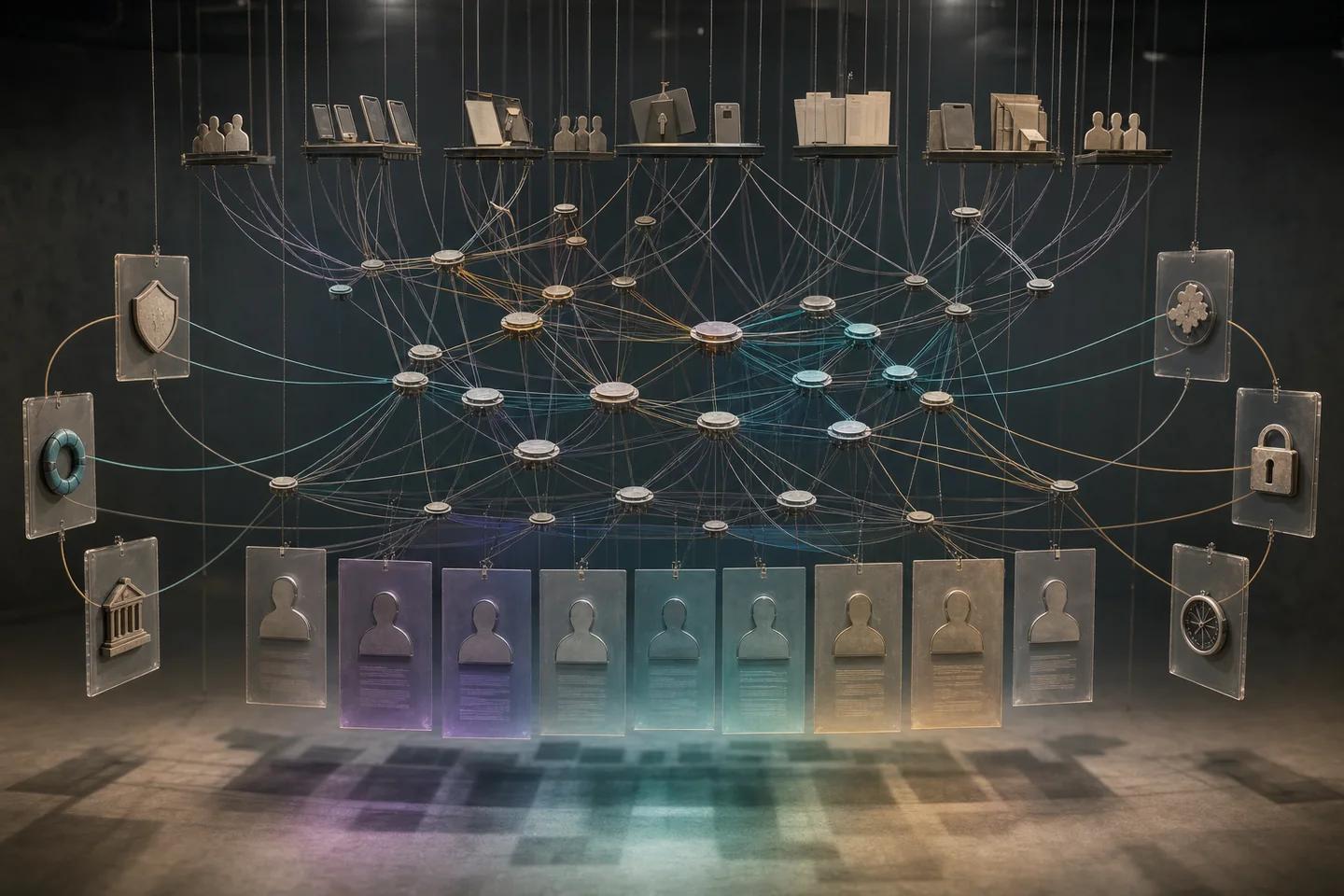
NeuroVerify, Neural Defend's deepfake detection API, checks the selfie, liveness video or audio submitted at onboarding in one request. Six signals run together: Visual Safety Screening, Live Presence Verification, Face Manipulation Detection, AI Generative Model Analysis, AI Pixel-Level Manipulation and AI Content Compliance. The response is one risk score with signal-level evidence, and your onboarding policy decides whether to approve, step up or send the case to review. Eligible image requests complete in under 200 ms p95 under defined test conditions.
NeuroVerify does not analyse ID documents, so it sits alongside your document verification provider rather than replacing it; a forged licence needs a document check, while the face on the selfie gets NeuroVerify's analysis. It also does not detect virtual cameras, so pair it with device and session integrity signals. Integration uses mobile SDKs for Android, iOS and Flutter and backend SDKs for Python, TypeScript, Go and Java, and deployment can be managed cloud, private cloud, on-premises or air-gapped.
On the public VendorBench-100 benchmark of 100 adversarial still images, including face swaps, AI photo edits and avatar composites, Neural Defend ranked first of 36 systems with an MCC of 0.876, against 0.646 for the next vendor. One VendorBench author also co-authored Neural Defend's ARCAS paper; the corpus is public so the results can be rerun.
Evidence boundary
Limitations
- Behavioural red flags have legitimate explanations and must be reviewed in context before restricting accounts.
- Media analysis assesses the submitted selfie or video; it cannot establish who later controls an account or moves funds.
- FinCEN's alert describes reported typologies and does not quantify how many mule accounts involve synthetic media.
Source record
Sources and references
- Financial Crimes Enforcement NetworkFinCEN Alert on Fraud Schemes Involving Deepfake Media Targeting Financial Institutions (FIN-2024-Alert004)Published November 13, 2024. Verified October 19, 2026.
- National Institute of Standards and TechnologySP 800-63A-4 HTML edition, Section 3.14 Digital Injection Prevention and Forged Media DetectionVerified October 19, 2026.
- INTERPOLGlobal Financial Fraud AssessmentVerified August 7, 2026.
- Financial Crimes Enforcement NetworkFrequently Asked Questions Regarding the FinCEN Suspicious Activity ReportVerified August 7, 2026.
- arXiv (Deshmukh et al.)VendorBench-100: A Unified Cross-Paradigm Benchmark for Deepfake Image DetectionPublished July 29, 2026. Verified October 19, 2026.