How does AI lip sync work?
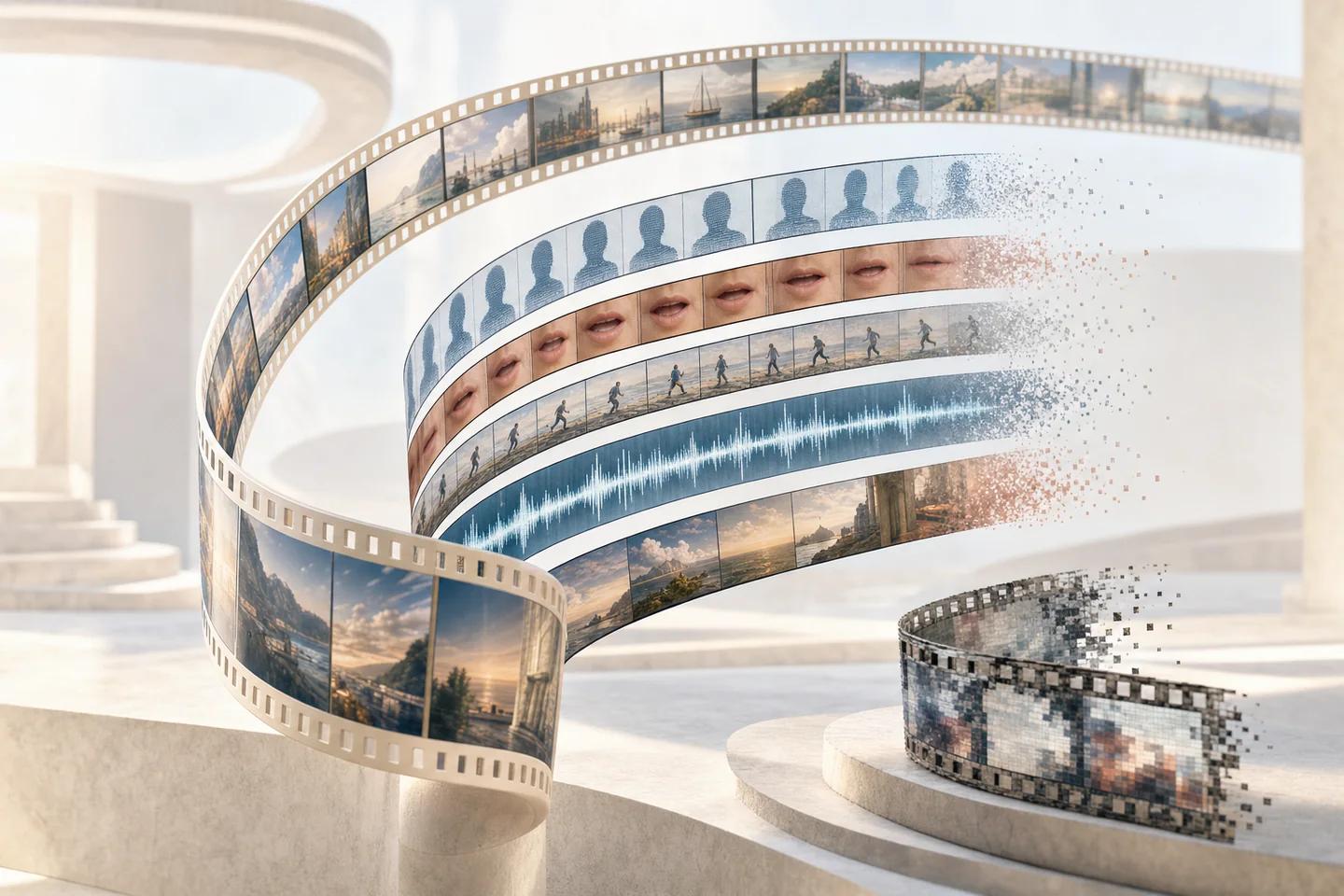
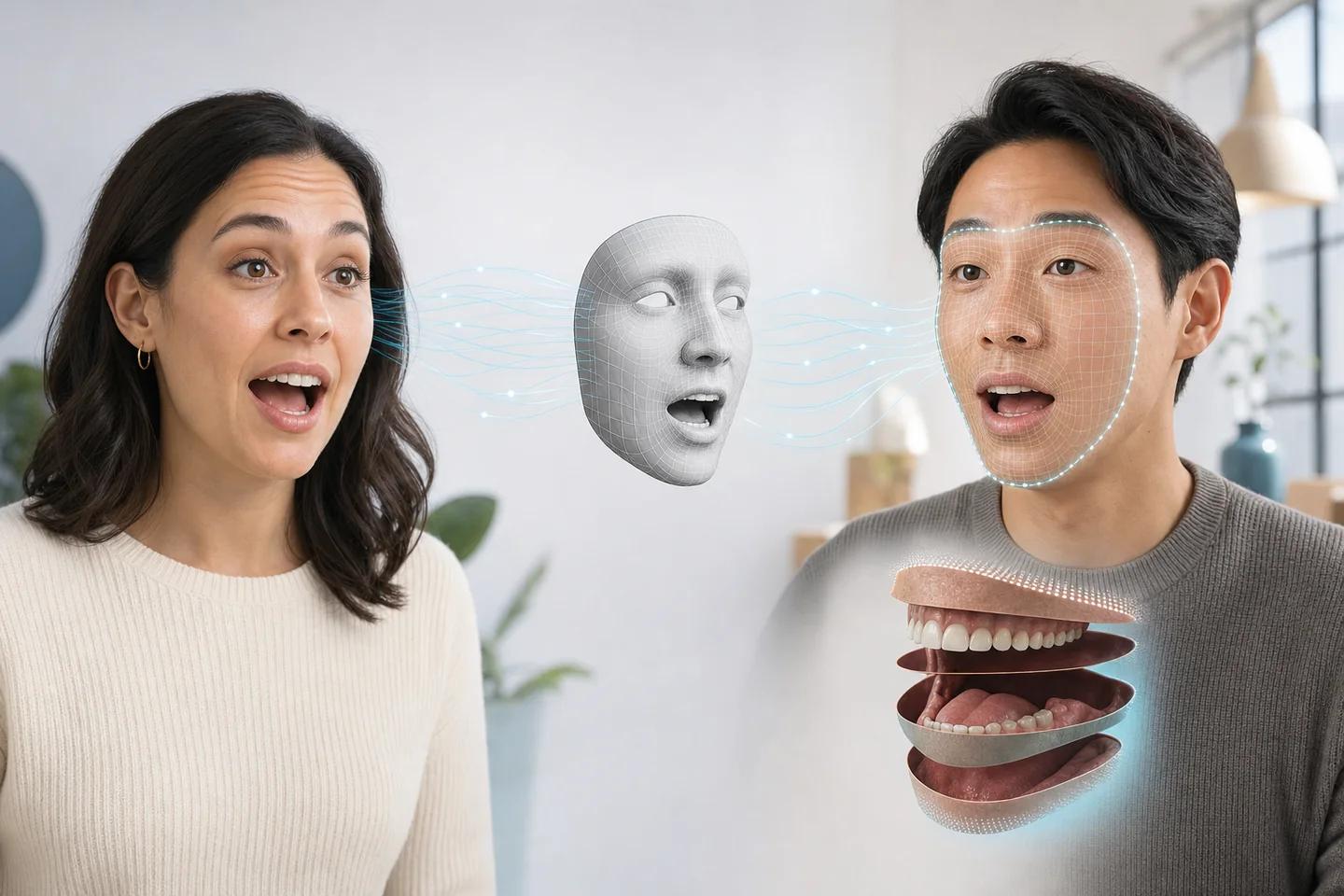
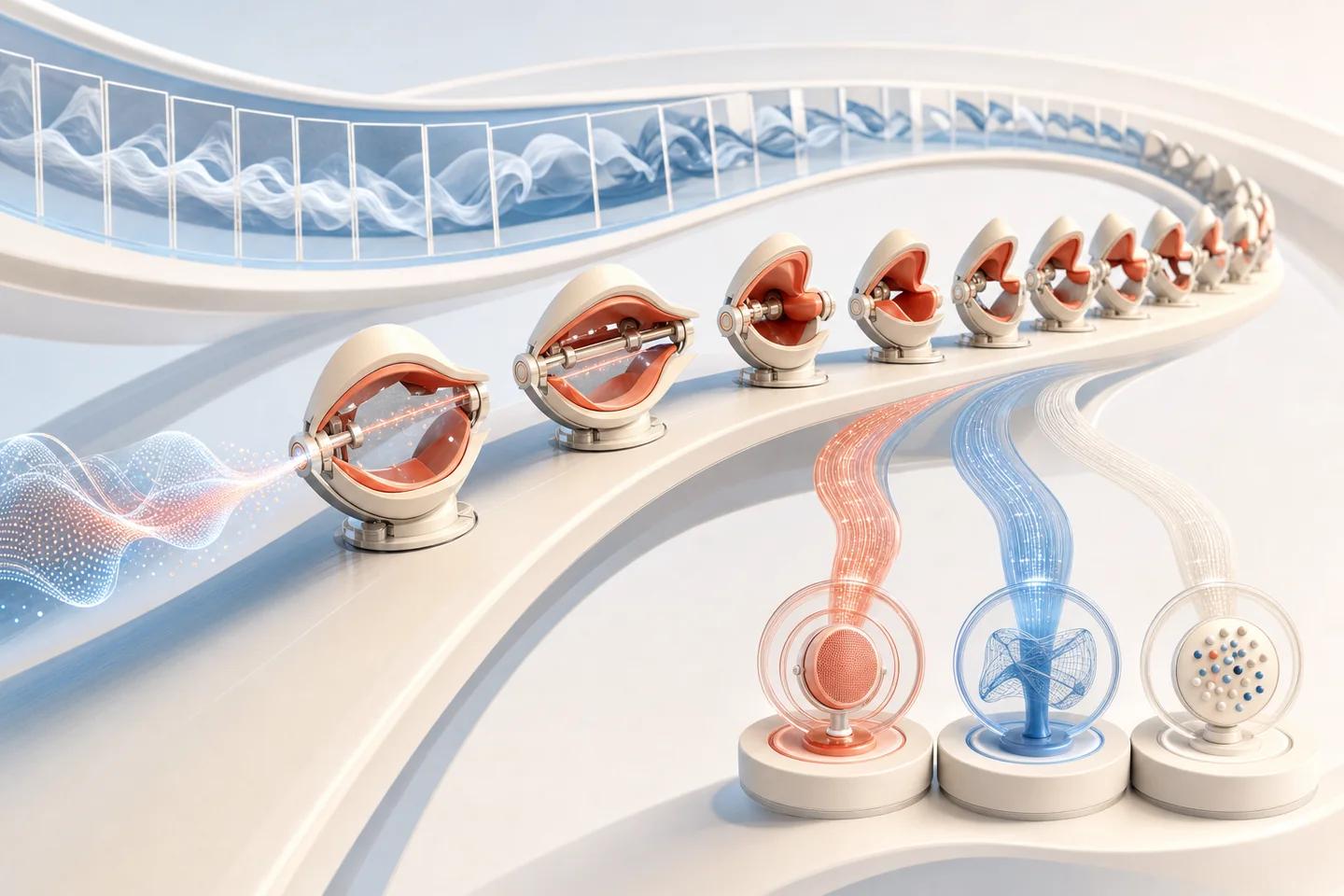
AI lip sync works in three stages. First, an audio encoder turns the target speech into a sequence of features that capture phonemes and timing, usually in short windows of a fraction of a second. Second, a generator predicts what the lower face should look like for each window: how open the mouth is, where the lips close for sounds like p and b, how much teeth and tongue show. Third, the generated mouth region is blended into the original frames, with smoothing so that edges and motion match the surrounding face.
The input video supplies everything else: the person's identity, lighting, head movement, eyes and background. That is the reason lip sync is efficient for an attacker. A few seconds of real footage plus a script, read by a voice clone or a hired speaker, produces a clip that keeps most of the authentic signal and changes only the part that carries meaning.
Newer talking-head systems go further and animate the whole head from audio and a single photo. Those are closer to reenactment or full synthesis. Classic lip sync stays narrow: supplied audio drives the mouth, and the rest of the frame is real.
| Technique | What is generated | What stays real |
|---|---|---|
| Lip sync | Mouth, jaw and teeth region | Identity, head pose, eyes, background |
| Face reenactment | Expressions and head motion | Identity and background |
| Face swap | The whole inner face | Body, background, often the voice |
| Talking-head generation | Entire face animation from one image | Only the reference photo |
How did audio-driven lip sync evolve from 2017 to 2020?
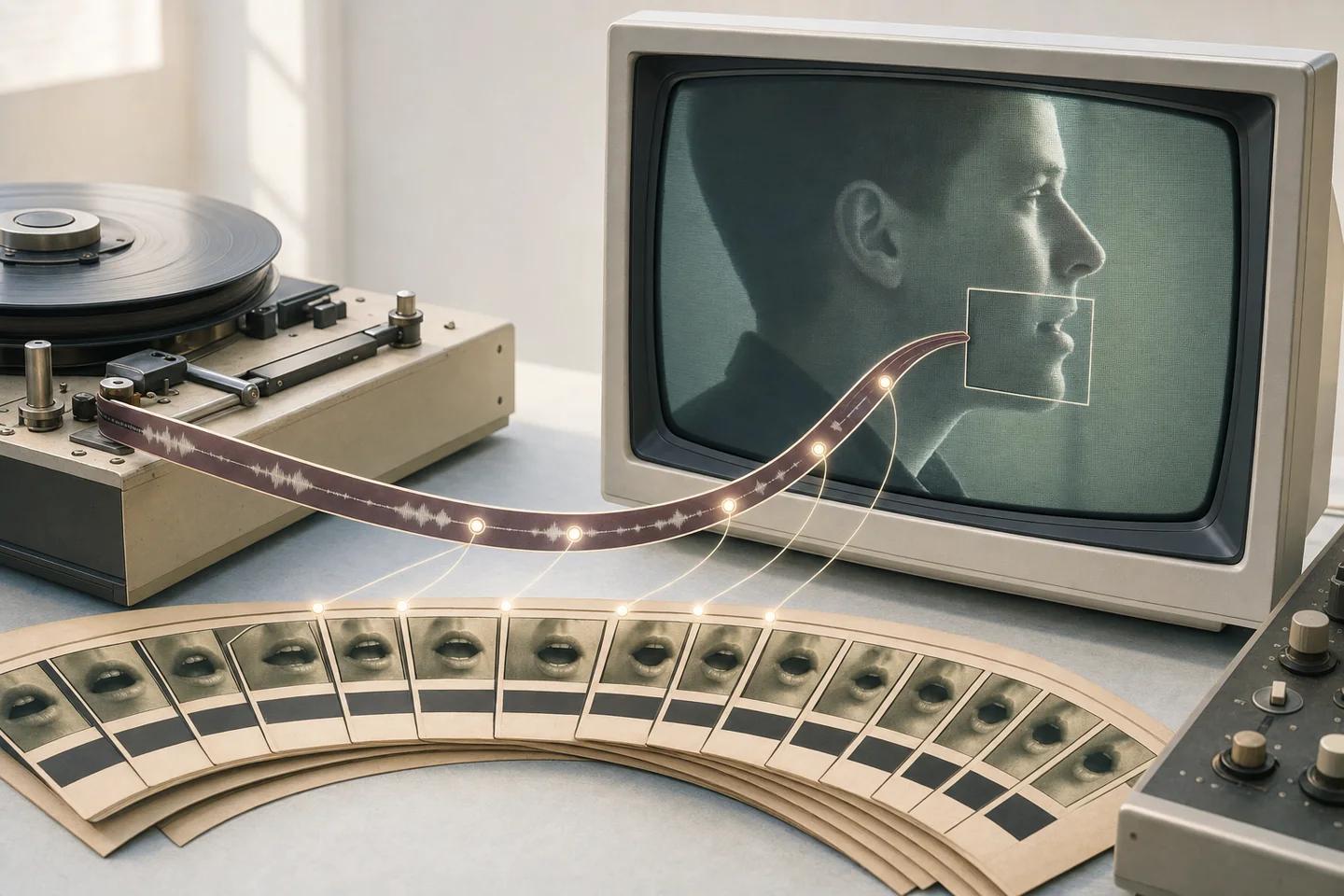
Audio-driven lip sync evolved from person-specific systems that needed hours of one speaker's footage in 2017 to models in 2020 that could sync almost any face in ordinary video. The 2017 landmark was Synthesizing Obama by Supasorn Suwajanakorn, Steven Seitz and Ira Kemelmacher-Shlizerman of the University of Washington, presented at SIGGRAPH 2017.
Their system trained a recurrent neural network on many hours of Barack Obama's weekly address videos. The network mapped raw audio features to mouth shapes; the pipeline then synthesised mouth texture and composited it into target footage, using 3D pose matching to choose frames where the head position fitted. It worked because the subject was filmed repeatedly in near-identical conditions, an archive few people have.
The result showed that convincing speech-driven mouth motion was possible, but it did not show that anyone could do it to anyone. Training data, compositing and frame selection were all tailored to one well-documented public figure.
How audio-driven lip sync generalized from one speaker to many
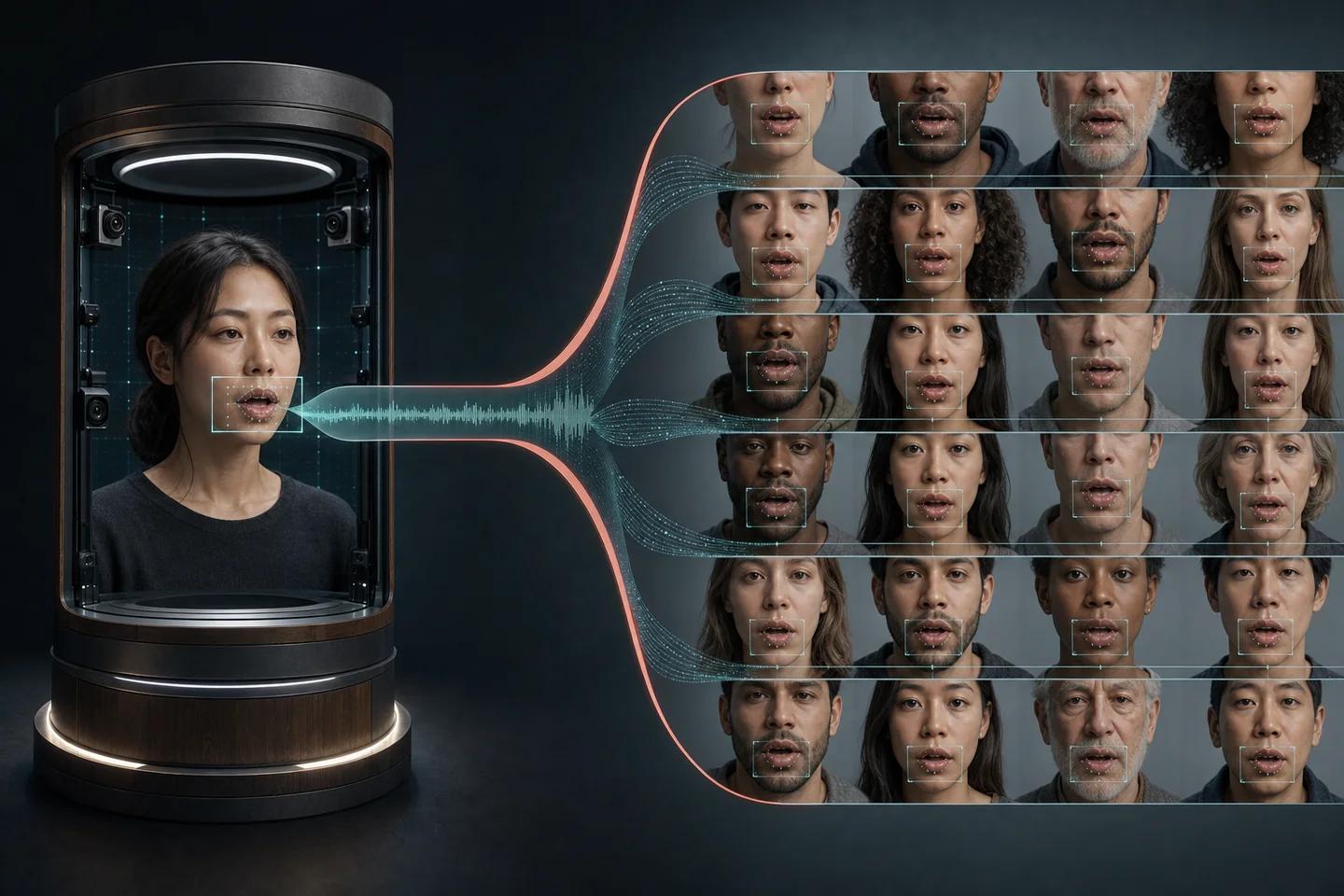
Wav2Lip, posted on arXiv on 23 August 2020 by K R Prajwal, Rudrabha Mukhopadhyay, Vinay Namboodiri and C V Jawahar and published at ACM Multimedia 2020, removed the need for a person-specific model. Its key change was training the generator against a pretrained lip-sync expert, a separate network that judges whether mouth motion matches audio. Because the expert was trained in advance on real talking videos, the generator could not cheat by producing blurry mouths that happened to fool a weak discriminator.
The authors reported lip-sync accuracy close to that of real synchronised video and proposed new benchmarks for unconstrained footage. The code was released publicly, and Wav2Lip quickly became a common component in dubbing tools and in hobbyist deepfake pipelines.
A sync expert measures one thing: whether lips and audio line up over a short window. It does not check whether the voice belongs to the person on screen, whether the emotion fits the words or whether the cheeks and breathing move naturally. A clip can pass a sync test and still be an obvious fake on other evidence.
Where lip sync is used, honestly and otherwise
Legitimate uses are common: film and advertising dubbing, translated lectures, accessibility and corrections to recorded presentations. In each of those cases the speaker or rights holder normally consents and the change is disclosed.
Misuse follows the same mechanics. A real clip of an executive, politician or celebrity is paired with new words to fake an endorsement, a statement or an instruction. The FBI Internet Crime Complaint Center reported in December 2024 that criminals produce fake promotional videos for investment fraud and use generated video to convince victims they are dealing with real people.
The audio side is often a cloned voice, which means a lip-synced fake combines two manipulations. It can also use genuine speech from another occasion, cut and re-ordered, which is why analysing only the video or only the audio leaves a gap.
How can you tell if a video's lip sync was faked?
You can sometimes tell from the mouth itself, but confirming the source is more reliable. Reviewers look for soft or smeared teeth, a lower face that is sharper or blurrier than the eyes, lips that fail to close fully on p, b and m sounds, jaw motion that ignores head turns, and a visible seam where the generated region meets the cheeks. Each of those can also come from compression, low frame rates, packet loss on a call or honest dubbing.
Because mouth and audio may come from the same edited file, their agreement is not independent confirmation. Look for the full original recording, an official transcript, a second camera angle or the first-party channel where the clip supposedly appeared. If none exists and the clip asks for money or action, treat it as unverified.
- Preserve the original file and its download source before anyone re-encodes it.
- Compare the clip with known authentic footage of the speaker from the same period.
- Analyse the audio track separately for voice cloning or splicing.
- Check frame-by-frame around plosive sounds, where generated mouths most often fail.
How NeuroDetect helps investigate a suspected lip-sync fake
NeuroDetect, Neural Defend's forensic media workspace, is built for this kind of question. An investigator uploads the authorized video into a case and reviews the result down to individual frames and regions, with explainability heatmaps that show whether the evidence clusters around the mouth while the rest of the face looks authentic. Audio can be examined at segment level in the same case, so the voice and the picture are assessed separately.
Each result keeps the model and version used, and an LLM-assisted summary links its plain-language statements to the underlying evidence for the analyst to check. The downloadable forensic report records observations, uncertainty and provenance, which matters when a clip is heavily compressed and confidence should be limited. The analyst makes the final call.
Evidence boundary
Limitations
- Visual cues described here vary by model and can be masked by compression or low resolution.
- Detecting a manipulated mouth region does not establish who made the edit or what the original words were.
- Legitimate dubbing produces many of the same signals; context and consent decide whether a clip is deceptive.
Source record
Sources and references
- University of Washington GRAILSynthesizing Obama: Learning Lip Sync from AudioVerified October 19, 2026.
- arXiv (Prajwal et al.)A Lip Sync Expert Is All You Need for Speech to Lip Generation In the WildPublished August 23, 2020. Verified October 19, 2026.
- FBI Internet Crime Complaint CenterCriminals Use Generative Artificial Intelligence to Facilitate Financial FraudPublished December 3, 2024. Verified October 19, 2026.
- U.S. Department of Homeland SecurityImpacts of Adversarial Use of Generative AI on Homeland SecurityVerified August 7, 2026.
- OfcomDeepfake Defences: Mitigating the Harms of Deceptive DeepfakesVerified August 7, 2026.