
What Is Content Fingerprinting?
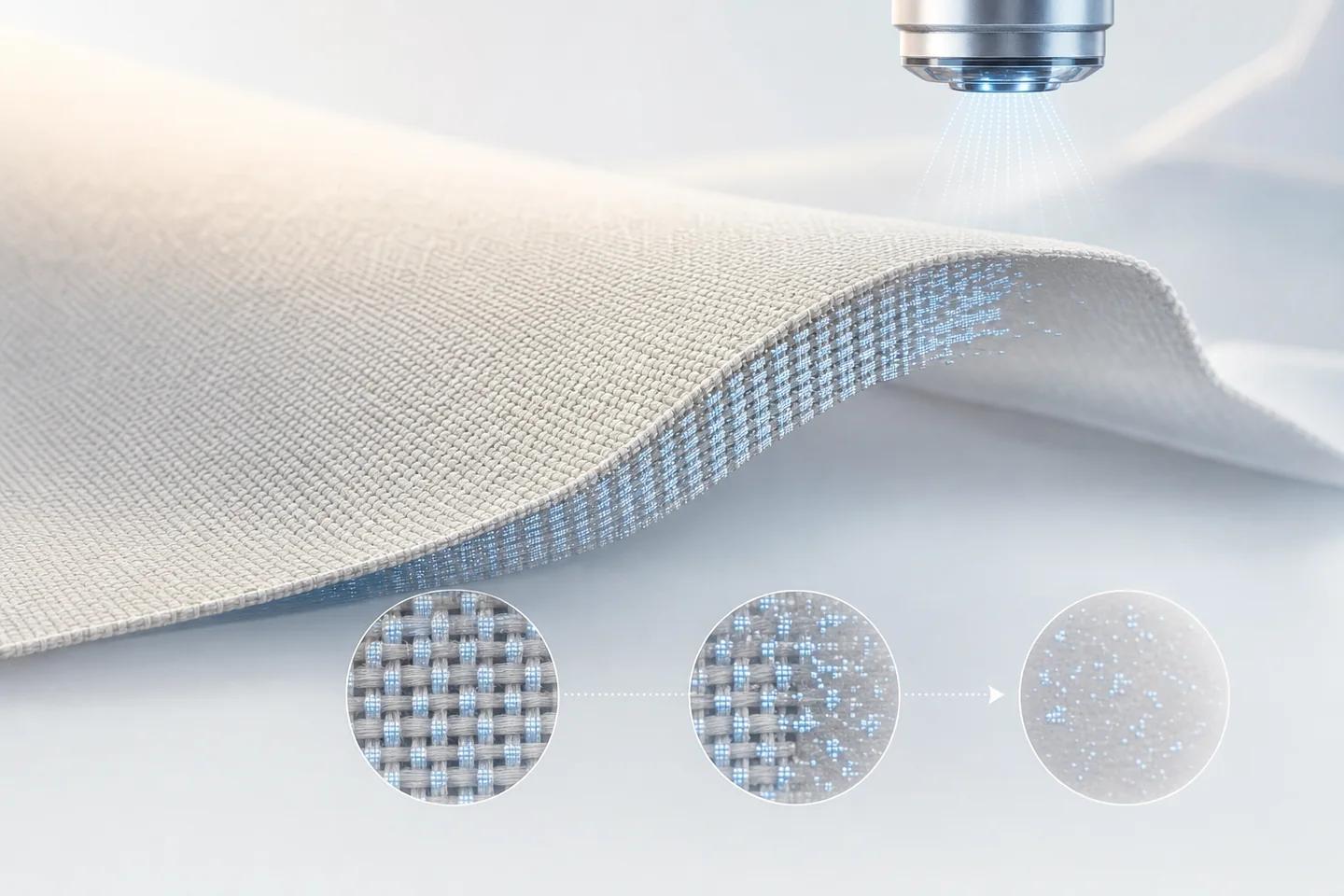
A content fingerprint is a compact value derived from what a file shows or sounds like. Compute it once, store it in a database, and later you can compute the fingerprint of any incoming file and look for a match. The original never has to be shared, which is why fingerprinting underpins most industry systems for blocking known abusive material.
NIST AI 100-4 (November 2024) treats hashes, or digital fingerprints, as one way to link content to provenance records held outside the file: a user computes the hash locally and looks it up in a trusted repository, recovering the record without sending the content anywhere. NIST also notes that fingerprints are widely used across the technology industry to tag and identify known harmful, illegal or sensitive content.
Cryptographic Hashes vs Perceptual Fingerprints
The two kinds of hash behave in opposite ways. A cryptographic hash such as SHA-256 is designed so that any change, even one bit, produces an unrelated value. That makes it ideal for proving a file is byte-for-byte unchanged, which is how C2PA hard bindings work, and useless for finding a resized copy. A perceptual hash, NIST explains, aims to give similar or identical values for similar content. Two copies of a photo saved at different quality settings will usually land within a small distance of each other.
Perceptual matching needs a threshold. Set it tight and lightly edited copies slip through; set it loose and unrelated images that happen to look alike start to collide. Any system that acts on a match, by removing content or attaching a provenance record, needs a review step for borderline distances.
| Property | Cryptographic hash | Perceptual fingerprint |
|---|---|---|
| Examples | SHA-256, MD5 | PDQ (images), TMK+PDQF (video), ISCC components |
| Re-encoded or resized copy | No match | Usually matches within a distance threshold |
| Proves the file is unchanged | Yes | No |
| Risk of false matches | Negligible | Real; needs thresholds and review |
| Typical use | Integrity, C2PA hard binding | Finding known content, C2PA soft binding |
How Does a Perceptual Hash Work?
Most image fingerprints follow the same recipe. The algorithm shrinks the image and converts it to greyscale, throwing away detail that compression and resizing would change anyway. It then transforms what is left into frequency components, keeps the coarse structure of light and dark regions, and records each component as a bit depending on whether it sits above or below the median. The result is a fixed-length string of bits that describes the image's overall layout rather than its exact pixels.
Two fingerprints are compared by counting how many bits differ, the Hamming distance. A recompressed copy might differ in a handful of bits, an unrelated image in about half of them. Video fingerprints apply similar ideas to sampled frames and add timing so that clips can be matched even when they are trimmed, and audio fingerprints work on spectrogram peaks.
Where Is Content Fingerprinting Used?
Abuse prevention is the largest deployment. Facebook, now Meta, released its PDQ image hash and TMK+PDQF video hash as open source on 1 August 2019 for finding identical and nearly identical photos and videos linked to child exploitation, terrorist propaganda and graphic violence; hashes can be shared through the Global Internet Forum to Counter Terrorism so other platforms remove the same content. Researchers published an evaluation of both algorithms on real case data that December. StopNCII, which helps adults stop the spread of intimate images, generates the hash on the person's own device; its site states that the hash is sent but the image or video is not, and participating platforms compare uploads against it.
Provenance recovery is the newer use. The C2PA specification lists fingerprints, alongside watermarks, as soft bindings: non-unique identifiers that can locate a manifest after the embedded metadata has been stripped. NIST cites the International Standard Content Code, which combines several perceptual hashing algorithms to stay similar through compression and cropping, as an example of this kind of identifier.
Can Content Fingerprinting Detect Deepfakes?
Only deepfakes that have already been found and catalogued. A fingerprint database can stop a known non-consensual deepfake from being re-uploaded, or flag that a viral clip matches one already debunked. It cannot assess a new file, because a newly generated face swap has no prior entry to match against. Fingerprinting answers have I seen this before; detection answers was this generated or altered.
Fingerprints can also help in the other direction. If a suspicious image closely matches an older authentic photo, the differences between the two point to where an edit was made. Reverse image search works on a similar principle at web scale and is often the fastest way to find an original.
Limits of Content Fingerprinting
Heavy transformations defeat perceptual hashes: large crops, mirroring, overlays, re-framing and screen recording change the content enough to move the fingerprint outside the threshold. Determined uploaders test these tricks deliberately. Collisions run the other way, where two different images produce near-identical fingerprints, and they matter most when a match triggers an automatic action.
A fingerprint match to a provenance record is a candidate, not a confirmation. C2PA requires that a soft binding never be treated as a hard binding, so a recovered manifest must be validated and checked against the asset before anyone relies on it. Logging the algorithm, the distance and the threshold makes later review possible.
How Fingerprinting and Neural Defend Detection Work Together
A sensible pipeline runs both. Fingerprint matching first catches known material cheaply. Anything without a match, which is most of what arrives, goes to content-based analysis. In investigations, Neural Defend's NeuroDetect takes an authorised image, video, audio file or document into a case, records model and version context, and shows explainability heatmaps and attention views down to regions, frames and audio segments. Its forensic report records provenance next to observations and uncertainty, so a fingerprint match or a recovered credential appears beside the detection findings.
For high-volume identity flows, NeuroVerify analyses each selfie image or video in one API call with six signals and returns a unified risk score in under 200 ms p95 on eligible image requests, which suits screening every new capture rather than only known ones.
Evidence boundary
Limitations
- Fingerprints only recognise content already in a database; they say nothing about newly generated media.
- Perceptual matches depend on thresholds, so both missed copies and false matches occur and need review.
- Specific algorithm behaviour varies; the robustness of a given hash to a given transformation should be tested on your own data.
Source record
Sources and references
- National Institute of Standards and TechnologyNIST AI 100-4: Reducing Risks Posed by Synthetic ContentVerified October 19, 2026.
- StopNCII.orgHow StopNCII.org worksVerified October 19, 2026.
- arXivPDQ and TMK+PDQF: A Test Drive of Facebook's Perceptual Hashing AlgorithmsPublished December 16, 2019. Verified October 19, 2026.
- VentureBeatFacebook open-sources image and video algorithms it uses to fight abusePublished August 1, 2019. Verified October 19, 2026.
- Coalition for Content Provenance and AuthenticityC2PA Content Credentials Specification 2.4Verified October 19, 2026.