Operations and servers
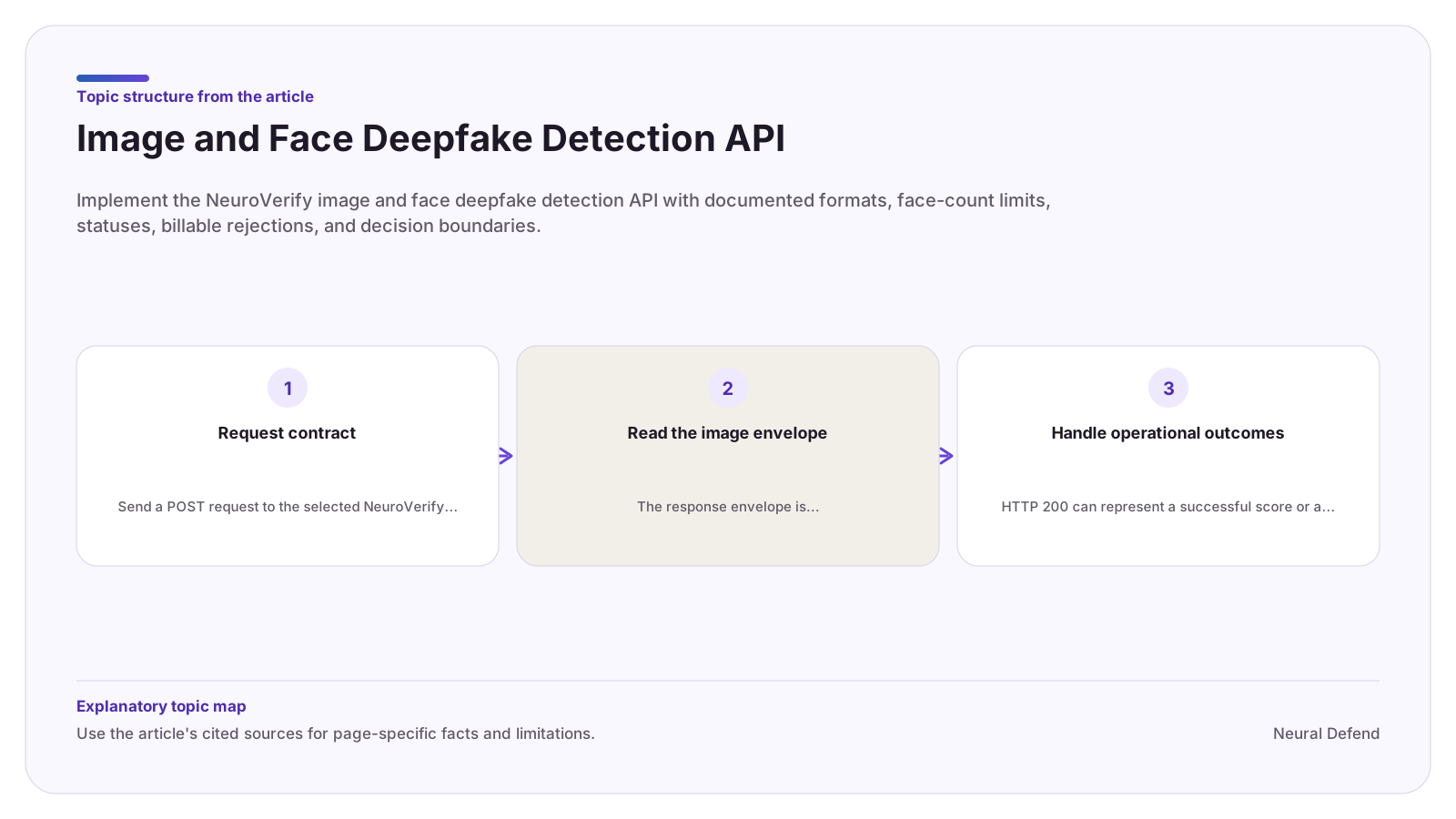
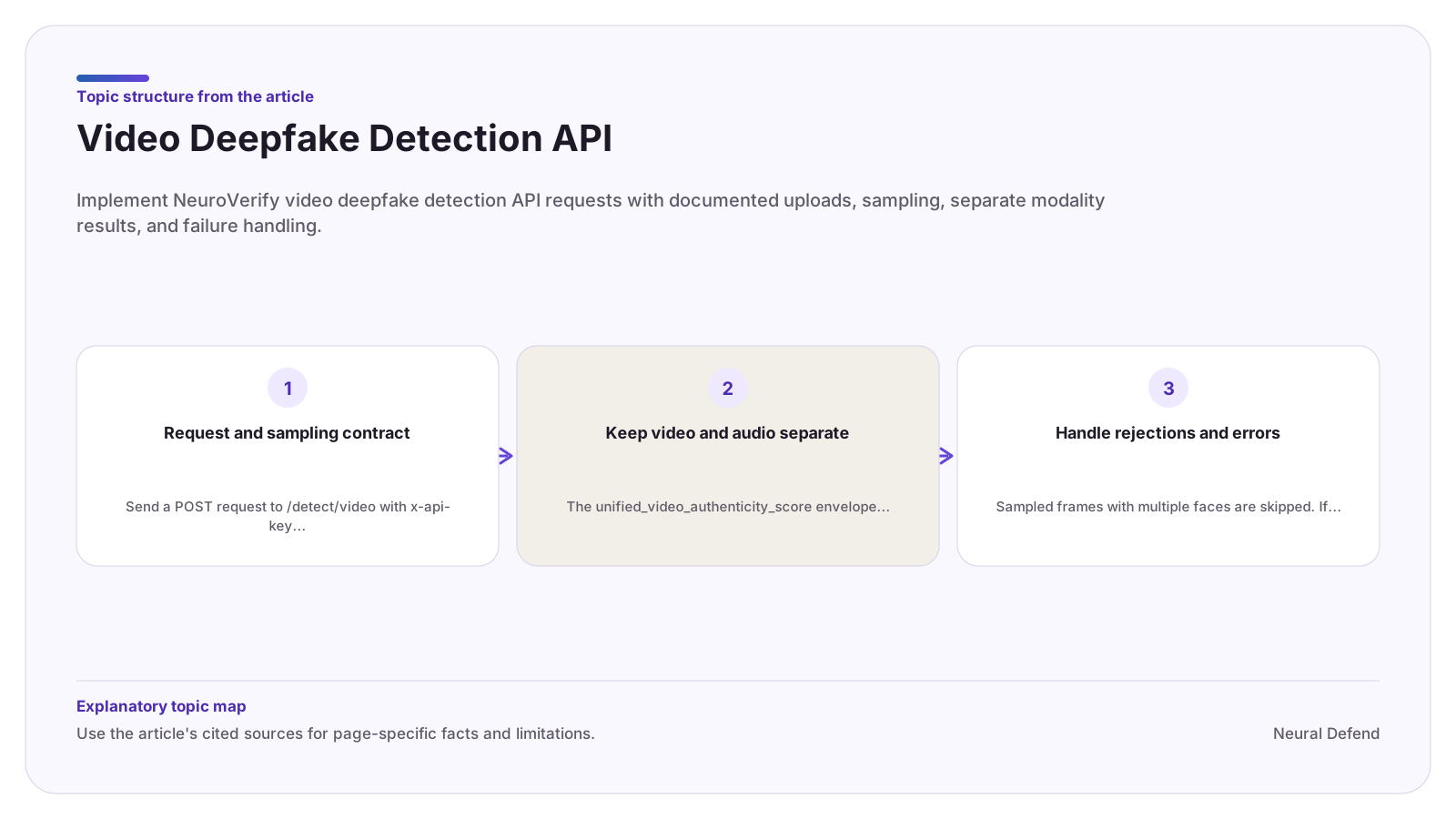
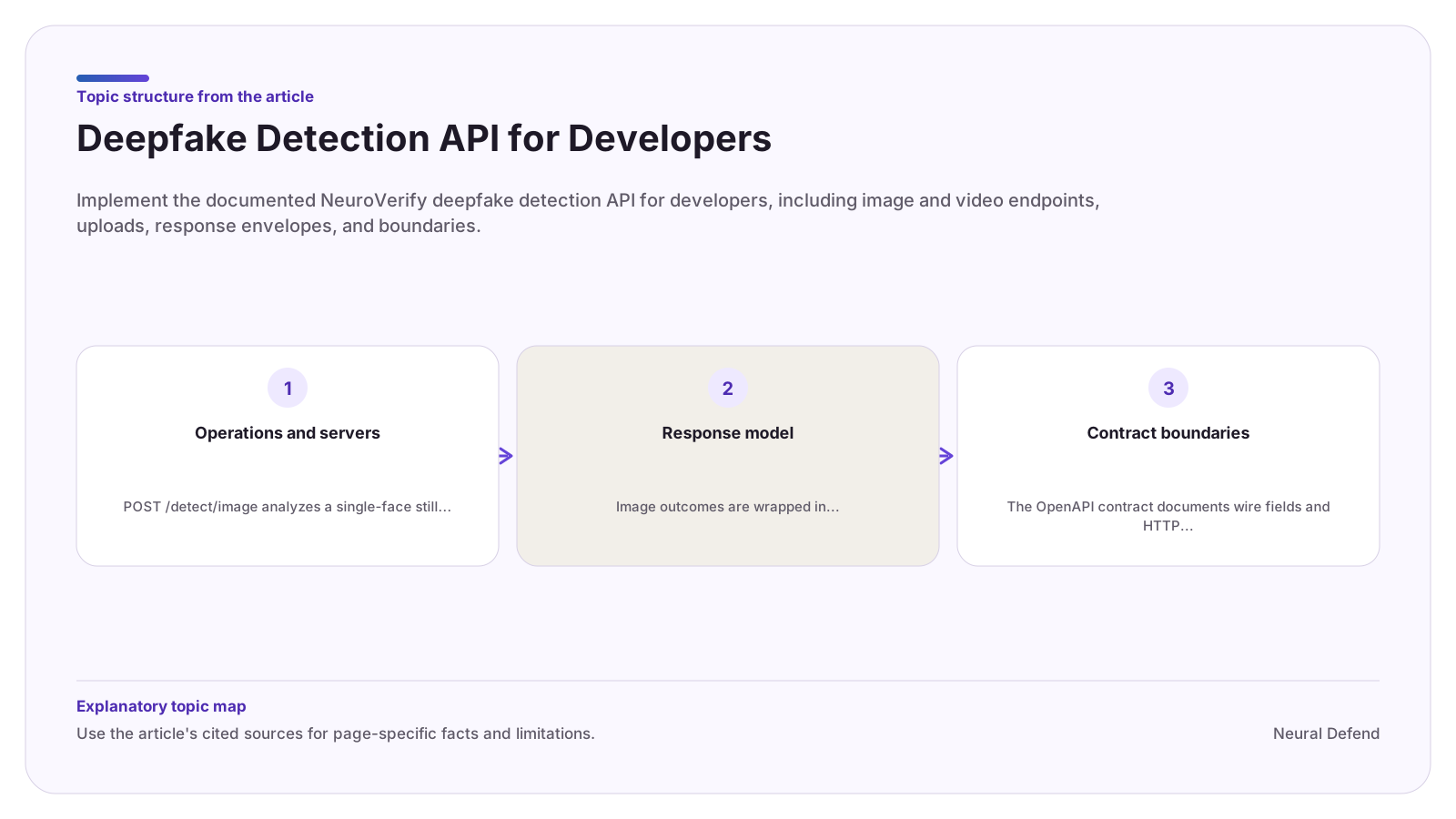
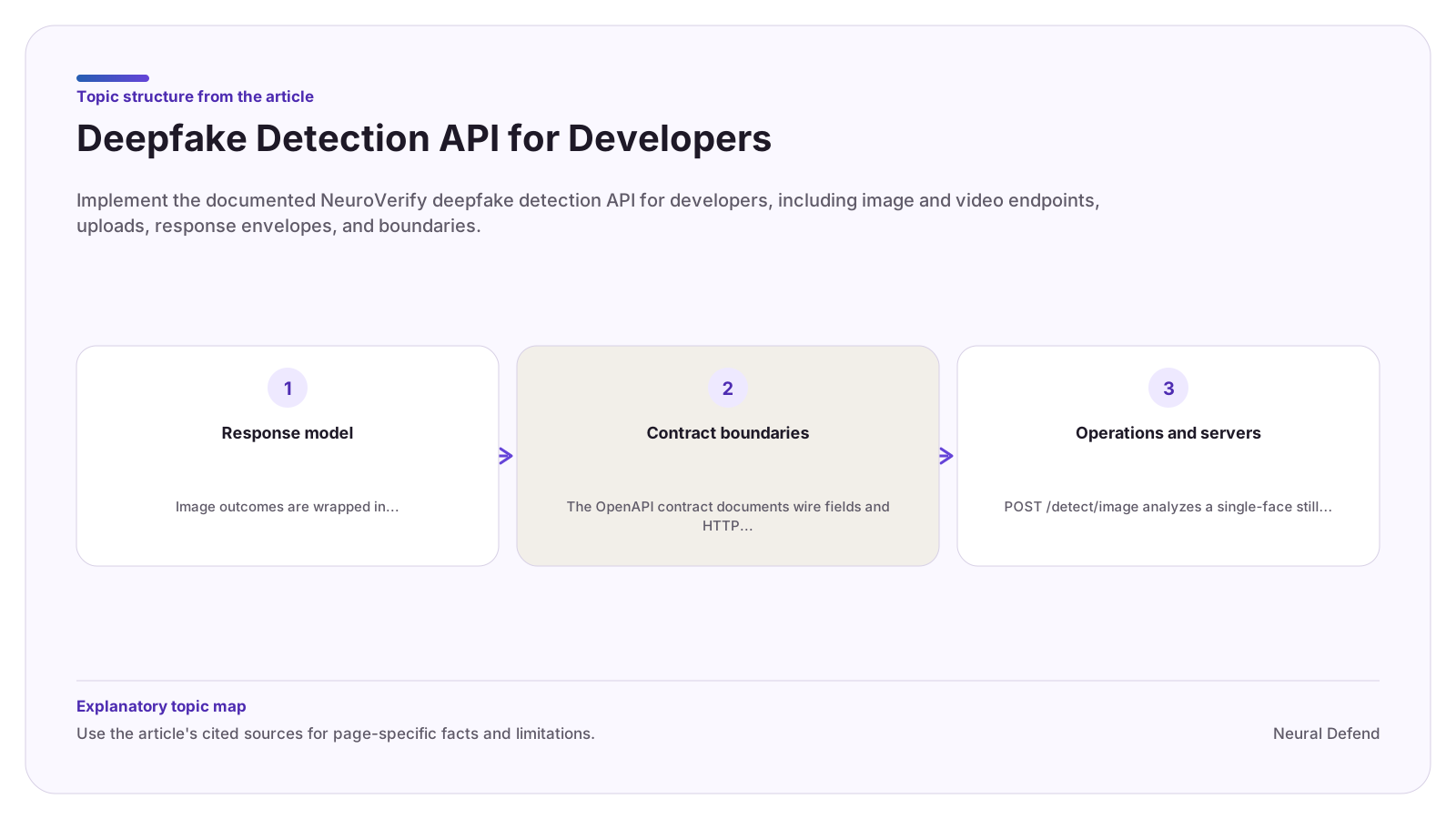
POST /detect/image analyzes a single-face still image. POST /detect/video analyzes a video and its audio track when present, returning separate modality fields. Both operations upload a file with multipart form data.
The OpenAPI document lists https://deepscan.neuraldefend.com for production and https://stage.deepscan.neuraldefend.com for staging. Use a credential issued for the selected environment and do not substitute an unverified origin.
- Image operationId: detectImage.
- Video operationId: detectVideo.
- Required multipart field: file.
- Optional video query parameters: max_frames and sample_rate.
Response model
Image outcomes are wrapped in unified_face_authenticity_score. Video outcomes are wrapped in unified_video_authenticity_score. Authentication, authorization, and rate-limit failures use an API error object with a detail field.
Read status and status_code before using risk data. The scored, rejected, and error states are part of the application contract. A missing or null score is not a low score.
Contract boundaries
The OpenAPI contract documents wire fields and HTTP behavior. Official SDKs expose normalized language-specific results and intentionally keep their normalized fields as the stable application surface. MCP clients should rely on the MCP structuredContent contract instead of copying the raw API envelope.
Do not infer tenant rate limits, service-level terms, retention, residency, or endpoint scope from the public schema. Confirm account-specific terms through the onboarding and support process.
Evidence boundary
Limitations
- The public OpenAPI file does not establish tenant-specific entitlement, rate allowances, pricing, retention, residency, or contractual service levels.
Source record