
How Do You Spot a Deepfake Job Candidate in an Interview?
Start with what the FBI has documented. Its public service announcement of 28 June 2022 described complaints in which the lip movements and actions of the person on camera did not fully match the audio, and in which coughs, sneezes and other sounds were out of step with the picture. Applicants were using stolen personal information, and pre-employment background checks sometimes turned up details belonging to another person. The jobs targeted were IT, programming, database and software roles, some with access to customer data and financial systems.
Interviewers can add simple live prompts that are hard for a real-time face swap to follow: ask the candidate to turn their head fully to the side, pass a hand in front of their face, or hold up an object near their cheek. Face swaps tend to blur or slip when the face is partly covered or turned. These prompts help, but they are not reliable on their own; better tools produce fewer visible glitches every year, and a nervous genuine candidate on a poor connection can look odd too.
The dependable test is to separate the interview from identity proofing. Ask the candidate to complete a short identity check in a dedicated flow: a live selfie or video, screened for face swaps, generated faces and replay, then matched to their government ID. If the face in that check does not match the face in the interviews, you have a concrete reason to pause.

How Do North Korean IT Workers Use Deepfakes to Get Hired?
North Korean IT worker schemes are the most documented case of synthetic identity hiring. The FBI's update of 23 January 2025 says these workers have been observed using artificial intelligence and face-swapping technology during video job interviews to hide their true identities. Once hired, some copied company code repositories to personal accounts, and after discovery some extorted employers by holding stolen code and data for ransom or releasing it publicly.
The deepfake is one part of a larger operation. The Justice Department announced on 30 June 2025 coordinated actions across 16 states, including searches of 29 known or suspected laptop farms, seizure of 29 financial accounts and 21 fraudulent websites, and about 200 computers. In one scheme described in that announcement, facilitators used the identities of more than 80 US persons to obtain remote jobs at more than 100 US companies. US-based helpers received company laptops and let the overseas workers connect to them remotely.
The FBI's recommended controls reach well beyond the interview: cross-check HR systems for applicants who share resume content, phone numbers or email addresses; watch for changes of address or payment platform during onboarding; monitor for remote desktop tools and many logins from different countries; and complete as much hiring and onboarding as possible in person.
Controls at Each Hiring Stage
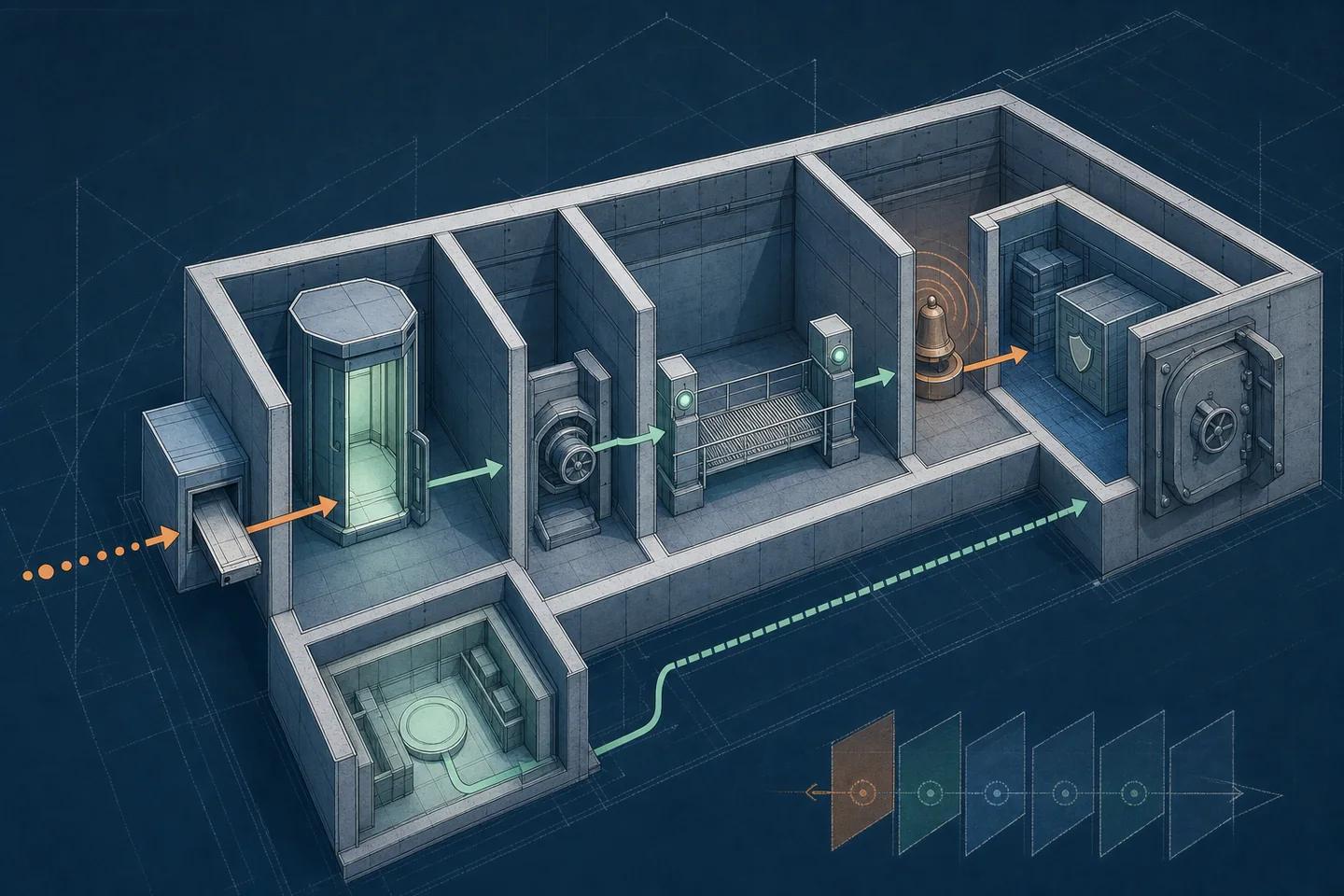
A fake candidate has to survive several handoffs. Each one is a chance to catch them, and the most important is the link between the person interviewed and the person who logs in on day one.
| Stage | What can go wrong | Check |
|---|---|---|
| Application | Stolen identity; resume and contact details shared across many applicants | Duplicate checks on phone, email, resume text and payment details |
| Video interviews | Real-time face swap or voice spoofing; a proxy interviewee | Live prompts; screened identity selfie matched to the ID, compared with interview footage |
| Offer and background check | Checks run on a real person whose identity is being used | Identity proofing bound to the offer, before the background check is trusted |
| Equipment shipping | Laptop sent to a facilitator's address | Ship only to a verified address; flag late address changes |
| Day one and first weeks | A different person shows up; remote access tools installed | Fresh face check matched to the hiring record; endpoint monitoring |
Who Should Own Candidate Identity Checks
Synthetic candidate fraud falls between teams. Recruiters own the process but not identity assurance; security owns access but sees the person only after they are hired; IT ships the laptop. Without a named owner, each team assumes another has checked. Give one function, usually security working with HR, ownership of candidate identity from the first interview to the end of probation, with clear triggers for escalation and a shared record of what was verified and when.
Third-party staffing firms and contractors need the same scrutiny. The FBI advises verifying that staffing firms conduct careful hiring practices and auditing them regularly, because a fake worker placed through a vendor reaches the same systems as a direct hire.
What Deepfake Detection Cannot Settle in Hiring
Deepfake detection answers whether a face or voice in a capture shows signs of being swapped, generated or replayed. It does not establish that a candidate is eligible to work, has the skills claimed, or is not acting for a sanctioned state. A real person can sit the interview and identity check and then hand the job to someone else, which is why day-one re-verification and endpoint monitoring matter.
Fairness matters too. Candidates with disabilities, poor bandwidth or older webcams may struggle with live prompts or selfie checks. Offer an alternative such as an in-person check at a partner location, and do not reject a candidate on a detection score without human review.
How NeuroVerify Fits Remote Recruitment
NeuroVerify, Neural Defend's face, video and audio API, checks a candidate's selfie, short video or voice sample for deepfakes and manipulation beyond liveness. One request returns six signals, including Live Presence Verification, Face Manipulation Detection and AI Generative Model Analysis, combined into a unified risk score with signal-level evidence. Hiring platforms can call it at the identity step, at offer and on day one, and the employer's policy decides what happens next.
Results arrive in under 200 ms at p95 on eligible image requests under defined test conditions, and Neural Defend describes integration as two lines of code with SDKs for Python, TypeScript, Go and Java and an MCP server for AI agents in recruiting workflows. When security suspects a hire after the fact, NeuroDetect lets investigators examine recorded interviews and submitted media down to frames and audio segments and export a forensic report. NeuroVerify does not analyse ID documents or run background checks.
Evidence boundary
Limitations
- Detection does not establish work eligibility, skills or ties to sanctioned states, and cannot catch a genuine person who later hands the job to someone else.
- Live interview video is compressed and variable, so a dedicated identity capture gives more reliable results than analysing the interview stream.
- Candidates with disabilities or poor connections may struggle with live prompts and selfie checks and need an alternative route.
- NeuroVerify does not analyse ID documents or run background checks.
Source record
Sources and references
- FBI Internet Crime Complaint CenterDeepfakes and Stolen PII Utilized to Apply for Remote Work PositionsPublished June 28, 2022. Verified October 19, 2026.
- FBI Internet Crime Complaint CenterNorth Korean IT Workers Conducting Data ExtortionPublished January 23, 2025. Verified October 19, 2026.
- U.S. Department of JusticeJustice Department Announces Coordinated, Nationwide Actions to Combat North Korean Remote Information Technology Workers' Illicit Revenue Generation SchemesPublished June 30, 2025. Verified October 19, 2026.
- National Institute of Standards and TechnologyNIST AI 100-4, Reducing Risks Posed by Synthetic ContentPublished November 20, 2024. Verified October 19, 2026.