What Suspect Media Reaches a Bank Fraud Team?
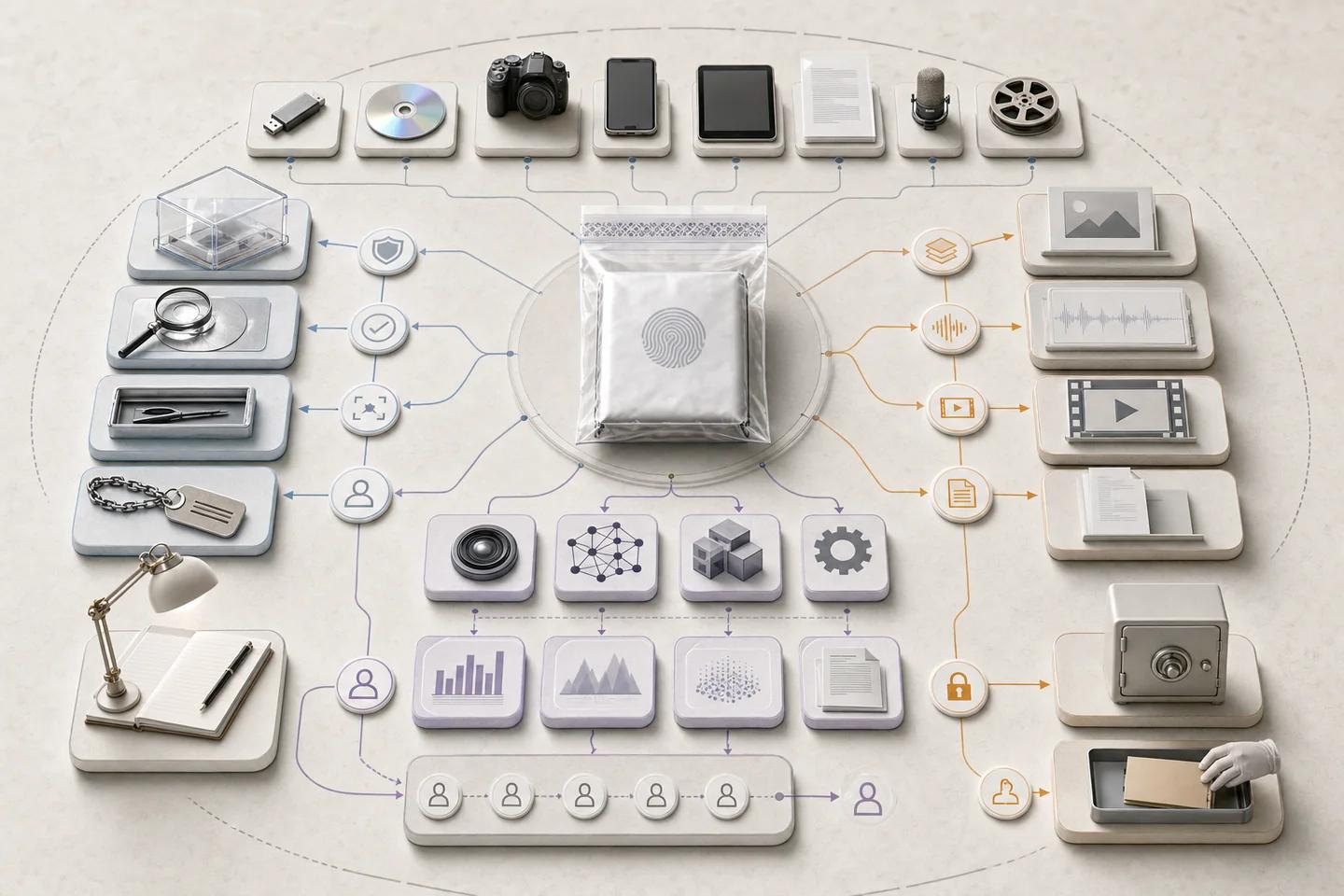
More than most teams plan for. Onboarding selfies and ID images flagged in re-review, call recordings from the contact centre, voice notes and videos customers forward as proof of a scam, screenshots of chats with impostors, invoices and change letters, and photos submitted in disputes all end up in fraud queues. Each arrives through a different channel with different quality and history.
The volume of deepfake-related cases is rising. FinCEN's alert FIN-2024-Alert004 (13 November 2024) says it observed an increase in suspicious activity reporting describing suspected deepfake media beginning in 2023 and continuing in 2024, and that institutions often found GenAI content in identity documents by re-reviewing account opening documents. The FBI's PSA I-120324 (December 2024) adds AI-generated audio and real-time video to the list of tools criminals use.
| Media | Typical source | First question |
|---|---|---|
| Selfie or onboarding video | Account opening re-review | Is the face swapped, synthetic or injected? |
| ID image | Onboarding file | Is the photo or text altered or generated? |
| Call recording or voice note | Contact centre, customer report | Is the voice synthetic or cloned? |
| Video of an executive or official | Scam victim, treasury request | Is the face or lip sync manipulated? |
| Invoice, letter or screenshot | Payment dispute, vendor change | Was the document edited after creation? |
How Do You Triage a Suspected Deepfake Quickly?
Screen first, investigate second. Preserve the original, run an automated manipulation check that returns a score with signal-level evidence in seconds, and use that score together with the case value to decide what happens next. Most items can be closed or routed in minutes; only a minority need forensic depth.
Quality decides how much the score means. A heavily compressed clip forwarded through three messaging apps, or a screenshot of a video, has lost much of the signal a detector reads. Record the quality limits next to the score, and route low-quality, high-stakes items to an analyst rather than trusting a clean result.
- Assign a case and artefact ID, save the original bytes and compute a hash.
- Capture who submitted it, through which channel, and what happened to it before it reached you.
- Open the file in an isolated environment and check format and quality.
- Run the automated screen and store the score, model version and signal evidence.
- Route: close, monitor, escalate to an analyst, or escalate urgently when money is still moving.
How Can Fraud Teams Operationalize Deepfake Detection?
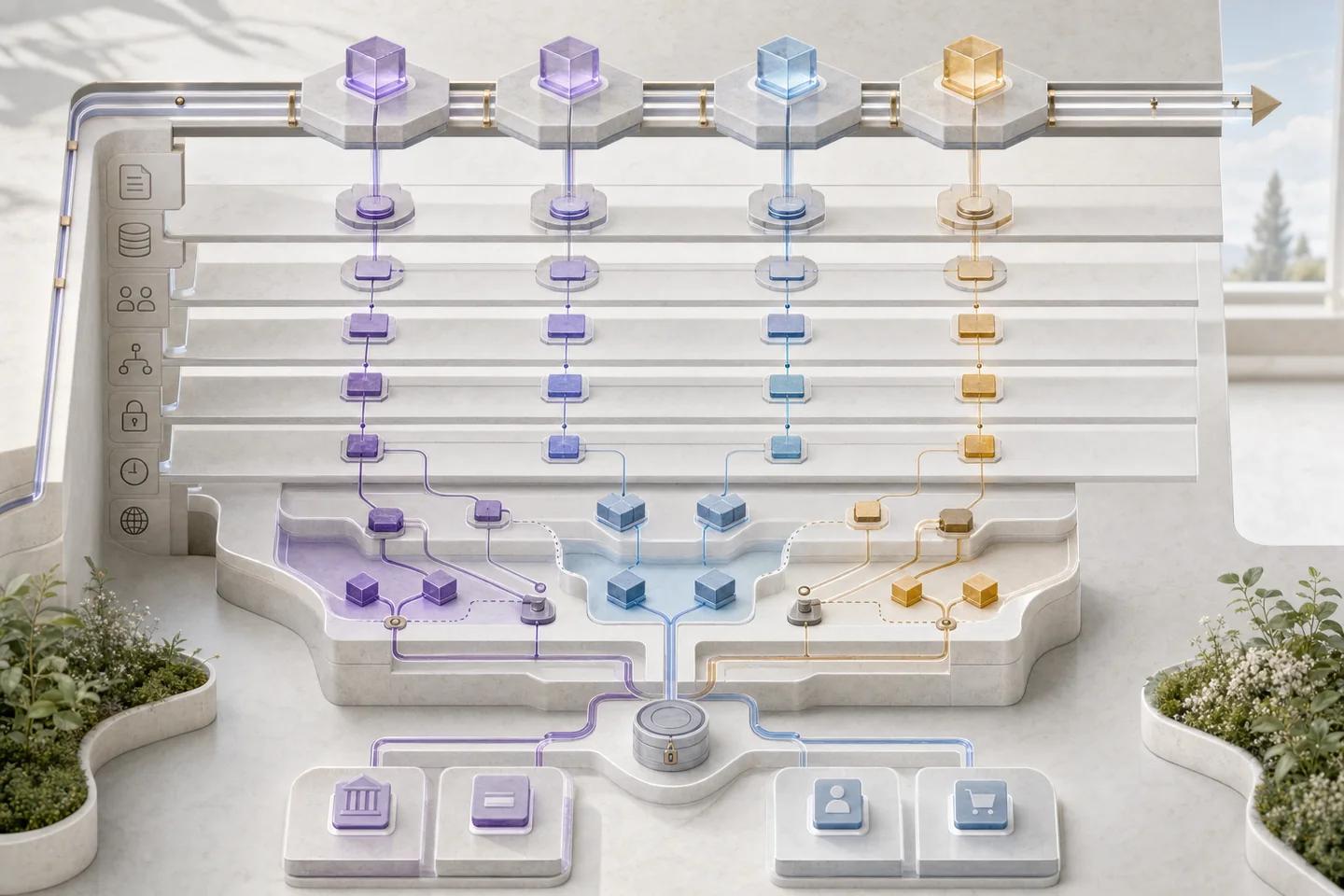
Put detection where media enters, not only where investigations end. Inventory the points where synthetic media can arrive (onboarding, recovery, contact centre, payment requests, disputes) and attach an API screen to each. Send the score into the existing fraud platform or case management tool as one more risk feature, so rules and analysts see it beside device, behaviour and transaction data.
Behind the screen, give analysts a forensic workspace for the cases that need explanation, with the model and version recorded so a result can be reproduced months later. Run a parallel proof of concept on your own historical cases before switching on automated actions, and tune thresholds per channel because a selfie queue and a call recording queue behave differently.

From a Media Finding to an AML Escalation and SAR Narrative
A manipulated selfie or cloned voice can be strong evidence, but it is evidence about the media, not a conclusion about money laundering or fraud. When a media finding feeds an AML alert, the investigator still reconstructs the transactions, counterparties and customer profile, documents red flags and plausible innocent explanations, and makes the filing decision under policy.
Write the media observation in the narrative as an observation with its uncertainty, for example that analysis indicated likely face manipulation in the onboarding selfie with a stated model version, rather than asserting that the customer used a deepfake. FinCEN asks filers to include the key term FIN-2024-DEEPFAKEFRAUD in SAR field 2 and the narrative when activity relates to its alert. FinCEN's SAR FAQ notes that filers generally keep copies of filings for five years; keep the media, hashes and analysis record with them under restricted access.

How Neural Defend NeuroDetect Supports Fraud Media Triage
NeuroDetect is a forensic media workspace. Analysts upload an authorised image, audio file, video or document into a case; the analysis keeps model and version context; and detailed views (the original, explainability heatmaps and attention views) go down to regions, frames and audio segments. An LLM-assisted plain-language summary links back to the evidence, the analyst makes the final call, and the case exports as a downloadable forensic report with observations, uncertainty, provenance, model context and analyst notes, plus structured results for the case system.
For high-volume intake, NeuroVerify screens selfies, video and audio in one API call with six signals and returns results in under 200 ms at p95 on eligible image requests. Both draw on ARCAS 1B, whose arXiv paper reports pooled accuracy from 97.65% on OpenFake to 99.99% on GenImage, and Neural Defend ranked first of 36 systems on the public VendorBench-100 still-image benchmark (MCC 0.876 against 0.646). One VendorBench author co-wrote the ARCAS paper, and the benchmark covers still images only. Deployment can be managed cloud, private cloud, secure container, on-premises or air-gapped.
What Media Analysis Cannot Establish
A detector can indicate likely manipulation, generation or replay. It cannot establish who made the file, whether the customer intended fraud, or whether a transaction was authorised. A clean result on a low-quality file is weak evidence, and a missing provenance record is not proof of fabrication. Analysts should avoid over-reading heatmaps and single scores, and record alternative explanations alongside the finding.
Reanalysis with a newer model should create a new result rather than overwrite the old one, so the case shows what was known when each decision was taken.
Evidence boundary
Limitations
- Media analysis indicates possible manipulation; it does not prove identity, intent, authorisation or fraud.
- Compressed, forwarded or screenshot media can hide the signals detectors rely on, so clean results on poor-quality files are weak evidence.
- VendorBench-100 covers still images only and shares an author with the ARCAS 1B paper; audio, video and document performance should be tested on your own cases.
- SAR content, timing, confidentiality and retention depend on institution type and jurisdiction; this page is not legal advice.
Source record
Sources and references
- Financial Crimes Enforcement NetworkFinCEN Alert on Fraud Schemes Involving Deepfake Media Targeting Financial Institutions (FIN-2024-Alert004)Published November 13, 2024. Verified October 19, 2026.
- FBI Internet Crime Complaint CenterCriminals Use Generative Artificial Intelligence to Facilitate Financial Fraud (PSA I-120324)Published December 3, 2024. Verified October 19, 2026.
- Financial Crimes Enforcement NetworkFrequently Asked Questions Regarding the FinCEN Suspicious Activity Report (SAR)Verified October 19, 2026.
- National Institute of Standards and TechnologyReducing Risks Posed by Synthetic Content: An Overview of Technical Approaches to Digital Content Transparency (NIST AI 100-4)Published November 20, 2024. Verified October 19, 2026.
- arXivVendorBench-100: A Unified Cross-Paradigm Benchmark for Deepfake Image DetectionPublished July 7, 2026. Verified October 19, 2026.
- arXivBenchmarking Neural Defend ARCAS 1B: A Foundational Multimodal Deepfake Detection ModelPublished September 21, 2026. Verified October 19, 2026.