
How do you prevent help desk impersonation attacks?
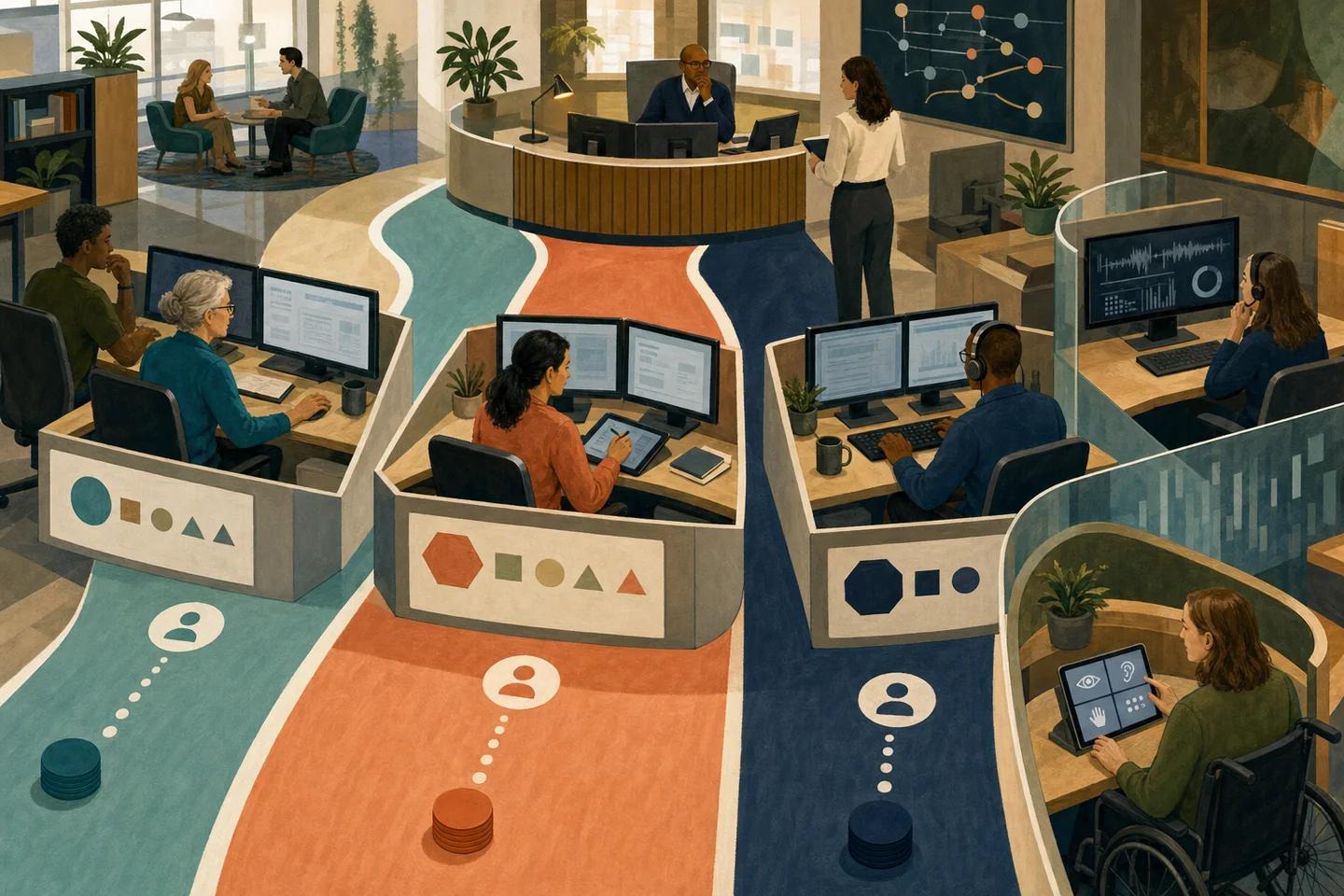
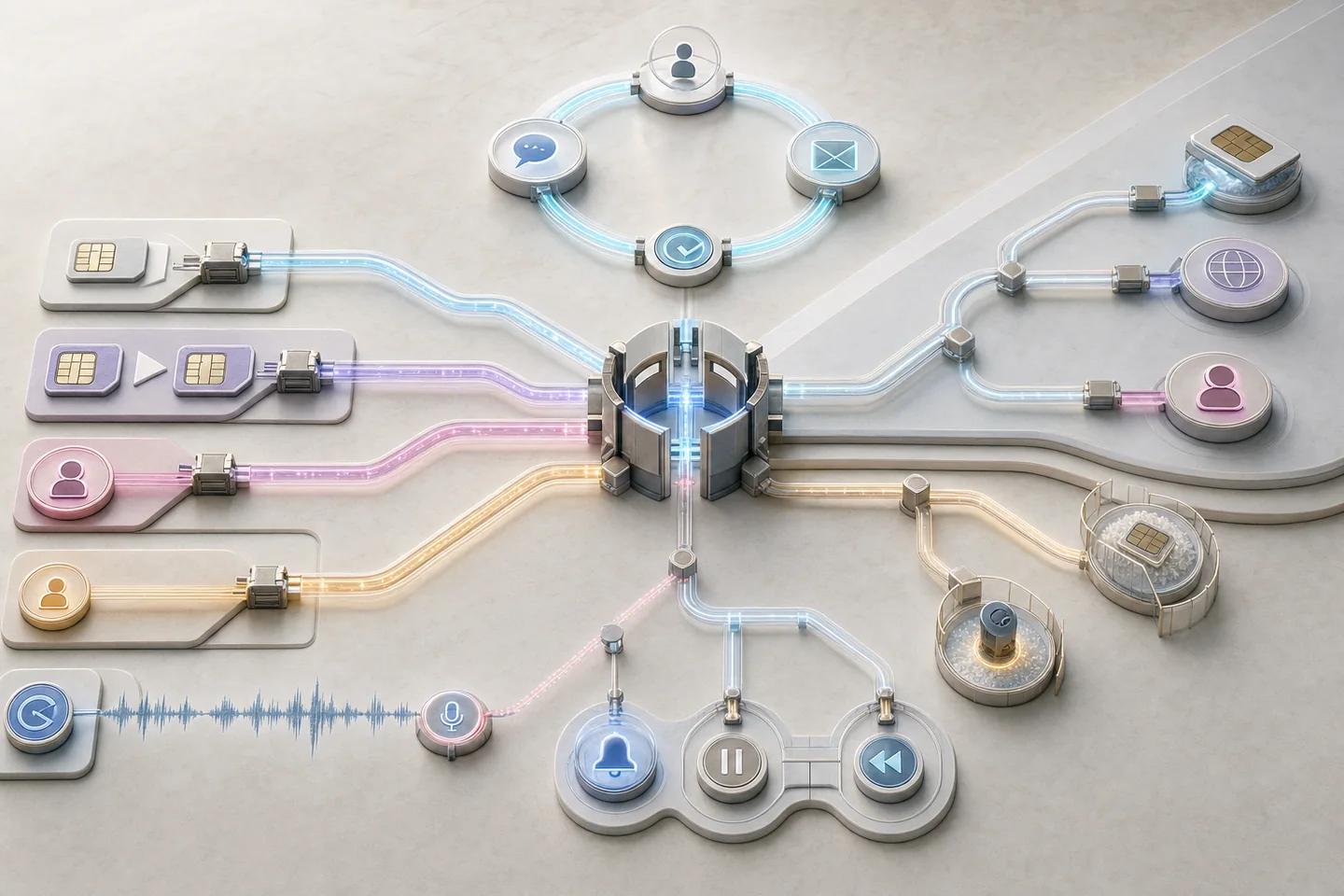
You prevent help desk impersonation attacks by removing the agent's discretion over identity. Agents should follow a fixed decision tree that lists which evidence is acceptable for each account class, which actions they may take and when the request must go to a supervisor or the security team. A persuasive caller, an urgent deadline or a familiar voice should never open a step that the tree does not allow.
The acceptable evidence should be things an impersonator cannot easily obtain: approval through a remaining registered authenticator, a callback to a number from the HR or identity directory that the caller cannot edit, recovery codes issued at enrolment, or a defined identity proofing process. Facts such as employee ID, manager name, office location or date of birth are not identity evidence, because they are often public or stolen.
- Publish a recovery decision tree by account class and make agents follow it.
- Call back on a directory number before any password, MFA or device change.
- Never ask for, or accept, passwords or active one-time codes over the phone.
- Require a second approver for privileged, finance and executive accounts.
- Notify the employee's established channels after every completed reset.
How do deepfakes target IT help desks to reset MFA?
Deepfakes target IT help desks by making a social engineering call sound like the real employee. The playbook is documented in the joint Scattered Spider advisory from CISA, the FBI and partner agencies in Canada, Australia and the UK. Attackers make early calls to learn how password resets work, then call back with personal details gathered from social media, open sources and data leaks, posing as the employee to convince help-desk staff to reset passwords or transfer MFA tokens to a device under the attacker's control. The group also uses SIM swaps and MFA fatigue, sending repeated push prompts until someone accepts.
A cloned voice strengthens that playbook in two ways. It defeats agents who know the employee and would notice a stranger's voice, and it defeats voice-based identity checks that compare the caller with an enrolled voiceprint. Voice cloning research such as Microsoft's VALL-E has produced a recognisable voice from a 3-second recording, and executives and public-facing staff have hours of audio online.
The help desk is also a target in reverse. The advisory notes that attackers pose as IT staff to employees, asking them to share one-time codes or install remote access tools. Both directions exploit the same trust: people expect the help desk to call about access problems.
How should help desks verify callers against voice deepfakes?
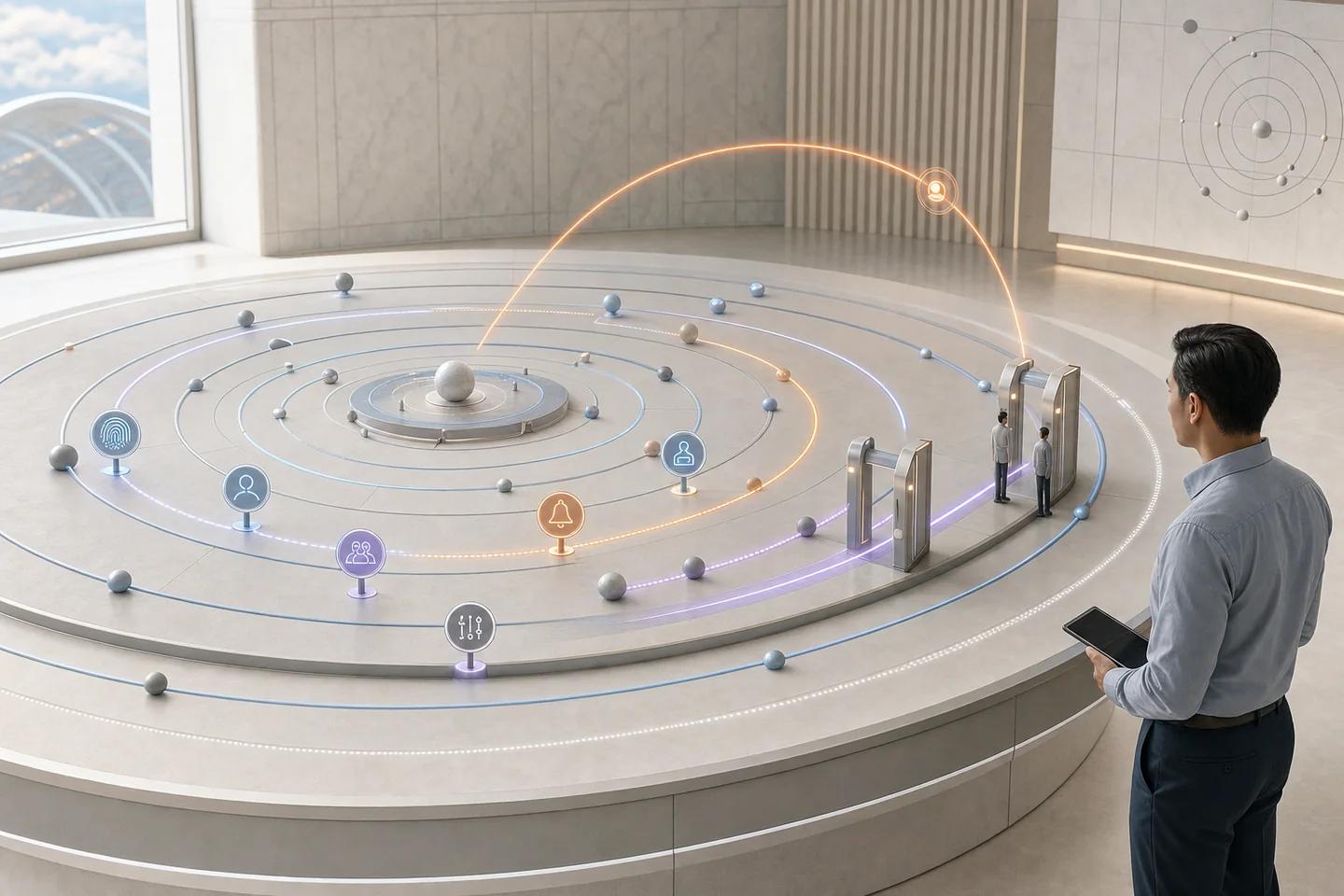
Help desks should verify callers against voice deepfakes by never treating the voice as evidence and confirming identity through a channel the caller does not control. End the inbound call, open a ticket, and call the employee back on the number in the directory, or push an approval to their registered authenticator. If the employee has lost every factor, route them to a defined proofing process, such as a video check with deepfake analysis or an in-person visit, with a manager confirming the request.
Voice deepfake detection adds a signal during the call. It can flag synthetic speech, prompt the agent to switch to the stricter path and record evidence for investigation. It should not be the only gate: a clean result means the detector found no synthetic patterns in that audio, not that the caller is the employee.
| Method | Resists cloned voice | Resists stolen data | Notes |
|---|---|---|---|
| Knowledge questions (ID, manager, birthday) | No | No | Retire for any reset decision |
| Recognising the caller's voice | No | Yes | A cloned voice defeats it |
| Callback to directory number | Yes | Yes | Weak if the attacker has SIM-swapped the number |
| Push approval to a registered authenticator | Yes | Yes | Use number matching to resist MFA fatigue |
| Manager-approved ticket plus callback | Yes | Yes | Recommended for privileged accounts |
| Video proofing with deepfake analysis | Partly | Yes | Needs injection and manipulation checks |
Raising the bar for privileged accounts
Administrator, finance, source-code, executive and security accounts can cause broad harm if recovered by an attacker. Keep a current inventory of them and require stronger evidence: two approvers, a time delay, or an in-person process. An urgent operational claim, such as a production outage or a deal closing tonight, should never cancel those requirements, and agents need explicit backing from leadership to say no.
After any privileged recovery, restrict sensitive actions until post-recovery checks finish. Review active sessions, new mailbox rules, newly enrolled authenticators and recent permission changes, and confirm with the employee through an established channel that the request was theirs.
Tools and data that help agents decide safely
The agent console should show account risk, recent recovery attempts, registered channels and which actions need escalation, while masking personal data the agent does not need. One-click escalation should preserve the call recording, ticket and evidence without tipping off the caller. NIST SP 800-63A-4 calls for proofing agents to have a way to flag suspected fraud.
A refused caller will often try again with another agent, shift, language or channel. Record the claimed identity, calling number, device indicators, scenario and requested action, within privacy limits, and look for repeated numbers or targets across tickets. If a reset did succeed, revoke the new access, restore verified factors, review downstream activity and warn the agent team with a short description of the campaign.
Where NeuroCall and NeuroDetect fit
NeuroCall is Neural Defend's voice and call deepfake detection product, currently in Beta. On a help desk line it is designed to flag synthetic or cloned voices so the agent moves the caller onto the stricter verification path. Because it is a Beta product, scope and integration options are agreed during evaluation.
After an incident, NeuroDetect gives investigators a forensic workspace for the authorized call recording and any media the attacker sent, with audio-segment views, an LLM-assisted summary linked to the evidence and a downloadable forensic report that records uncertainty and the model version. Where the recovery path includes a selfie or video check, NeuroVerify scores that media with six signals in one API call. In every case, the result is an input to the help desk's policy, not a replacement for the callback.
Evidence boundary
Limitations
- Voice deepfake detection on narrowband phone audio has less evidence to work with and can miss high-quality clones; NeuroCall is in Beta.
- Callbacks fail if the attacker has already taken over the employee's phone number, so authenticator-based approval is stronger for high-risk resets.
- The Scattered Spider advisory documents help desk social engineering broadly; it does not state how often cloned voices were used.
Source record
Sources and references
- Cybersecurity and Infrastructure Security AgencyScattered Spider (Cybersecurity Advisory AA23-320A)Published November 16, 2023. Verified October 19, 2026.
- National Institute of Standards and TechnologySP 800-63A-4 HTML edition, Digital Identity Guidelines Identity Proofing and EnrollmentVerified October 19, 2026.
- National Institute of Standards and TechnologySP 800-63B-4, Digital Identity Guidelines: Authentication and Authenticator ManagementVerified August 7, 2026.
- arXiv (Wang et al., Microsoft)Neural Codec Language Models are Zero-Shot Text to Speech SynthesizersPublished January 5, 2023. Verified October 19, 2026.
- Federal Bureau of InvestigationFBI Warns of Increasing Threat of Cyber Criminals Utilizing Artificial IntelligenceVerified August 7, 2026.