
What are the warning signs of channel switching in an impersonation attack?
The warning signs of channel switching are a request to leave the channel where the relationship is normally conducted, a destination you cannot verify, and a conversation that becomes more sensitive once the move happens. Legitimate people change channels too, so the move alone does not prove fraud. It does mean the identity you trusted on the first channel has not been confirmed on the second.
Watch for the pattern rather than any single sign. A message on a work channel that says the sender's usual account is down, followed within minutes by a link to a new app, a voice note in a familiar voice and then a request for a code or a payment, matches several documented impersonation campaigns.
- An early, insistent request to continue on a personal messaging app, private email or new phone number.
- A destination account with little history, a different display name format or no shared contacts.
- A reason that discourages checking: travel, a confidential deal, a broken laptop, a meeting in progress.
- Voice notes or short video calls offered as proof of identity instead of a callback you place.
- Requests that escalate after the move: documents, contact lists, codes, gift cards, payments or software installs.
- During identity verification: a user who claims repeated glitches and asks to finish the check by email, messaging app or a different camera.
Why attackers move victims to a new channel
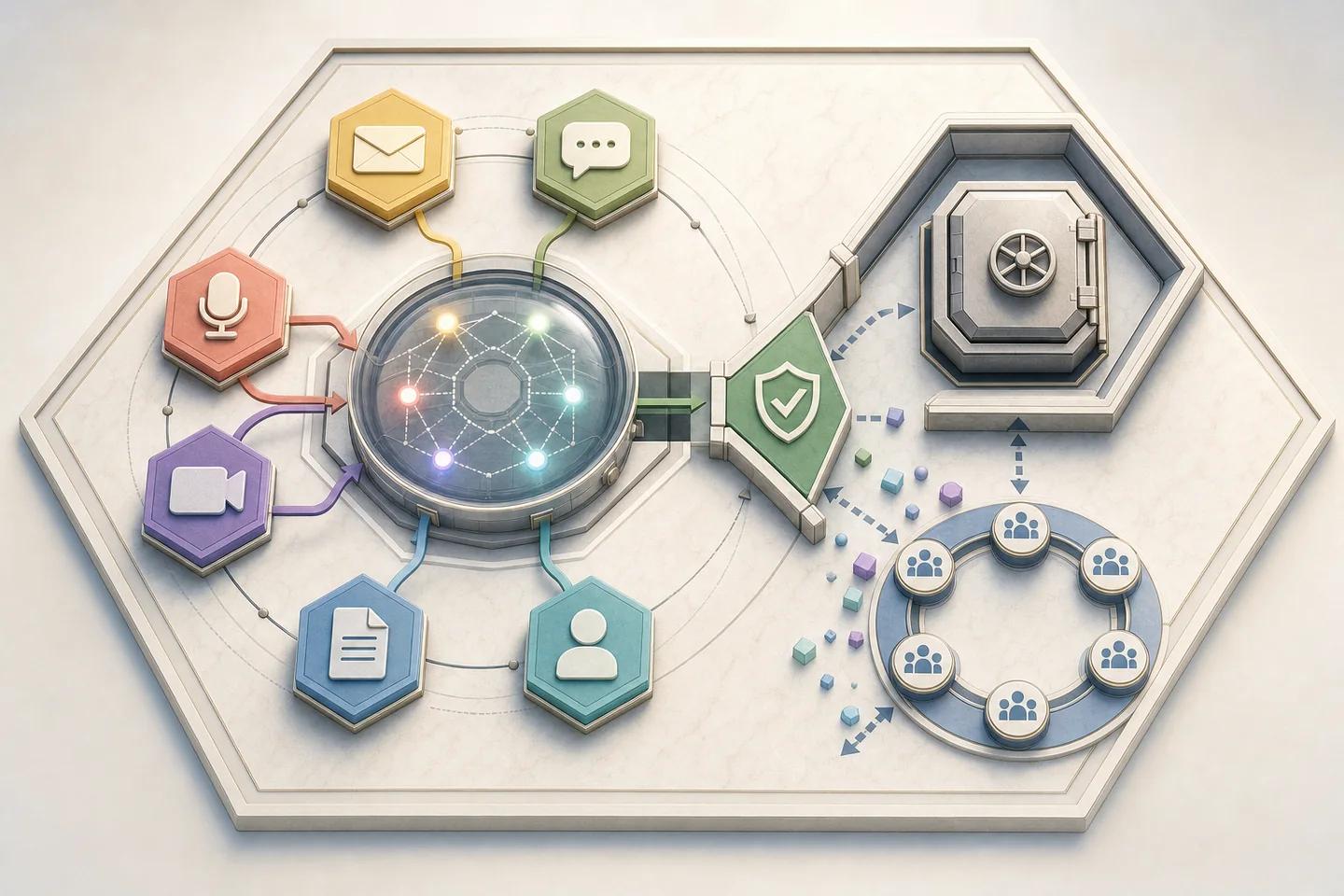
Attackers move victims to a new channel because it removes the people and systems that might stop them. A corporate mailbox has filtering, logging, retention, a directory to check names against and colleagues copied on threads. A personal messaging app has none of those. The FBI's 2025 alert on impersonated officials describes actors who sent text and AI-generated voice messages, built rapport briefly and then asked targets to move to a secondary encrypted messaging application, where links and requests for authentication codes followed.
The new channel is also where synthetic media becomes useful. A cloned voice note or a short video call appears to confirm identity at exactly the moment the target is outside normal verification routes. The scale of the underlying fraud is large: the FTC reported on 10 March 2025 that US consumers lost more than US$12.5 billion to fraud in 2024, including US$2.95 billion to imposter scams, with email, phone calls and text messages the most reported contact methods.
How trust escalation unfolds after the switch
Most campaigns climb a ladder of requests. Each step is small compared with the one before, so the target never faces a single obviously suspicious ask. Policy should therefore attach verification to the type of action requested, not to how friendly or convincing the conversation has become, and the rule should apply even after days of normal-seeming contact.
| Stage | Typical request | Verification required |
|---|---|---|
| Rapport | Small talk on a familiar topic, a voice note | None, but note the new channel |
| Information | Org charts, schedules, contact lists, documents | Confirm the person through a known contact first |
| Access | Authentication codes, password resets, meeting links, software installs | Always refuse inside the chat; use the formal IT process |
| Money | Payments, gift cards, crypto, bank detail changes | Independent callback and two-person approval in the payment system |
| Expansion | Introductions to colleagues or clients | Warn the introduced people through verified channels |
Channel switching inside identity verification
The same tactic appears in onboarding and recovery. FinCEN's alert of 13 November 2024 on deepfake fraud notes that criminals using a generated identity document may claim repeated technical glitches or ask to change communication methods during a live verification check, and lists use of a third-party webcam plugin during a live check as a red flag. The goal is to escape the controlled capture flow and submit pre-generated media instead.
Identity platforms should treat a request to move a verification to email, chat or an uploaded file as a step down in assurance. Either keep the user in the controlled flow, or apply deepfake and manipulation analysis to whatever media arrives by the alternative route and route the case to review.
Verification that still works after a channel switch
Verification has to be independent of the channel the attacker controls. IC3's business email compromise guidance recommends confirming account-information changes through a secondary channel or two-factor authentication. Apply that principle here: call back on a number from the employee directory or vendor master, or message the person on their established work account, and confirm both the identity and the specific request.
Keep the action itself in a governed system. A chat message can alert someone to an urgent need, but the bank change, access grant or data release should happen in the approved tool, with identity, role, time, destination and approver recorded. That preserves separation of duties and gives investigators a record if something goes wrong.
- Never accept a callback number or link supplied in the new channel.
- Require two-person approval for high-consequence changes requested outside normal systems.
- Preserve the original request, the destination account identifiers and any media before blocking.
- Notify people introduced or named in the thread through verified channels.
Where NeuroVerify helps when media arrives on a new channel
When a switched conversation or verification produces a selfie, a short video or a voice clip offered as proof, NeuroVerify can score it before anyone acts. One API call runs six signals, including Face Manipulation Detection, AI Generative Model Analysis, AI Pixel-Level Manipulation and Live Presence Verification, and returns a single risk score with signal-level evidence. Eligible image requests complete in under 200 ms p95 under defined test conditions.
Identity verification providers and orchestration platforms can call NeuroVerify for any media that arrives outside the controlled capture path, using SDKs for Python, TypeScript, Go or Java or the REST API, and route high-risk results to review. The score informs the decision; your policy and the independent callback still decide whether to proceed.
Evidence boundary
Limitations
- Channel switching is a risk indicator, not proof of fraud; many legitimate requests involve a change of channel.
- Media analysis can flag synthetic voices or faces but cannot confirm that a new account belongs to the claimed person.
- FTC and FBI figures describe reported cases and do not isolate attacks that involved channel switching or synthetic media.
Source record
Sources and references
- Federal Bureau of InvestigationSenior U.S. Officials Continue To Be Impersonated in Malicious Messaging CampaignVerified August 7, 2026.
- Financial Crimes Enforcement NetworkFinCEN Alert on Fraud Schemes Involving Deepfake Media Targeting Financial Institutions (FIN-2024-Alert004)Published November 13, 2024. Verified October 19, 2026.
- Federal Trade CommissionNew FTC Data Show a Big Jump in Reported Losses to Fraud to $12.5 Billion in 2024Published March 10, 2025. Verified October 19, 2026.
- FBI Internet Crime Complaint CenterBusiness Email CompromiseVerified August 7, 2026.
- MITREMITRE ATLASVerified August 7, 2026.